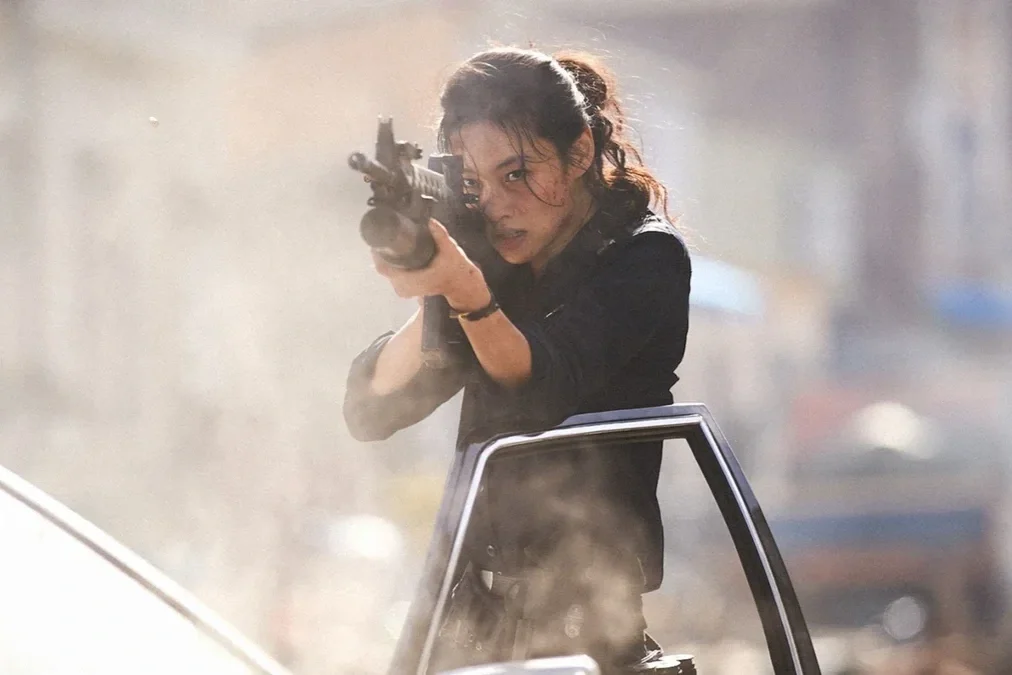
Warning: while the first half of this review is spoiler-free, the second half is not.. If you haven’t seen the movie yet, feel free to read up to the second warning.
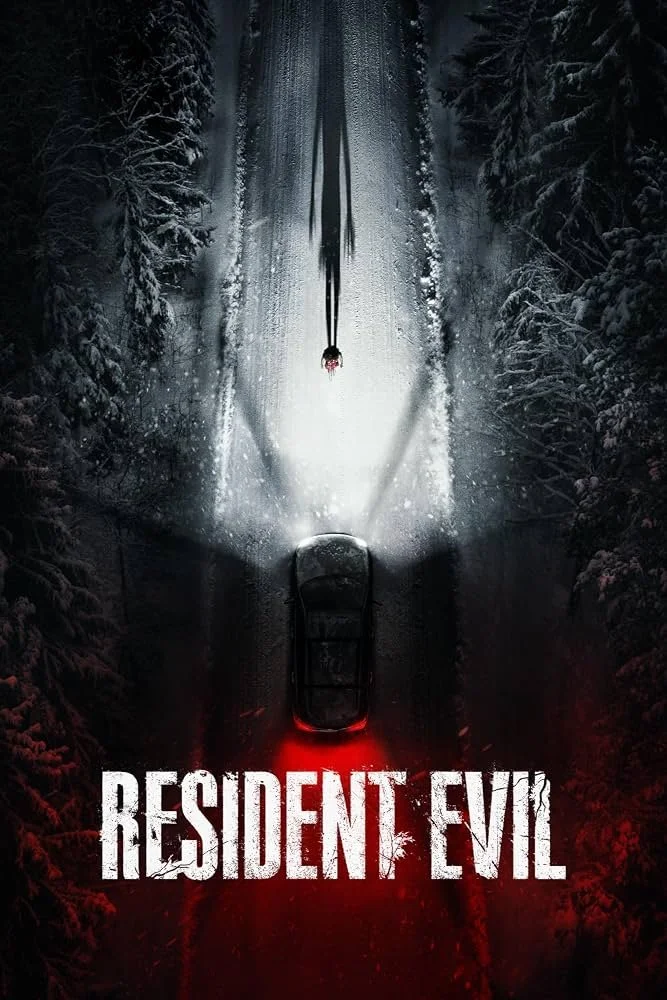
Zach Cregger’s “Resident Evil” (2026) was easily my most anticipated movie of this year. Starting in the summer of 2025, I played through all of the mainline “Resident Evil" games for the first time in order to prepare for the release of “Resident Evil: Requiem” last February. In the process, I became a huge fan of the series.
When it was announced that Zach Cregger would be helming the next film adaptation, it seemed like a no-brainer; His previous films, “Barbarian” (2022) and “Weapons” (2025) already have a bit of “Resident Evil” DNA in them. Given how much I love those movies, I thought he’d knock a “Resident Evil” adaptation out of the park.
He very nearly did, too.
About 90% of this movie is tremendous. Unfortunately, the film stumbles so hard at the finish line that my roommate and I left the theater feeling deeply unsatisfied and upset.
The first act of Cregger’s “Resident Evil” is phenomenal. This movie is expertly shot, and it has a score full of synth-y tunes that feel as though they were ripped straight from one of the games. The main theme in particular is really good. I’ve mentioned in previous reviews how much I like horror scores that get my head bobbing and my blood pumping, and this track does that very well. All of this works in tandem with the film’s lighting and settings during the first chunk of the movie to create a very gripping, nightmarish atmosphere that I adore.
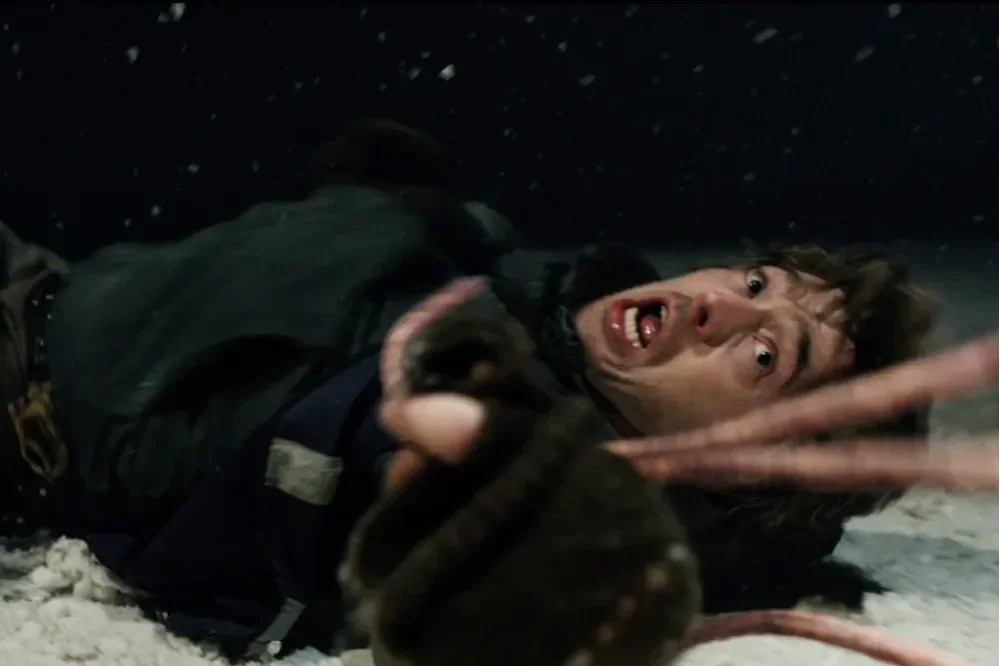
Bryan, a medical courier tasked with delivering an important package to a hospital in Raccoon City, is an endearingly stupid protagonist. He’s played by Austin Abrams, whose performance carries the film. An apt comparison that I’ve seen people make with Abrams and this movie is with Bruce Campbell and the original “Evil Dead” trilogy. It’s a strangely full-circle moment. In the past, the “Evil Dead” films have inspired multiple aspects of several “Resident Evil” games. Now, we have a “Resident Evil” movie reminiscent of the old “Evil Dead” films.
The first portion of Cregger’s Resident Evil is probably where this blend of horror and comedy is at its best. I found myself chuckling at the movie’s jokes with Bryan several times, yet they didn’t undercut the film’s horror at all during the first act.
I honestly wasn’t expecting to get scared by this movie. However, there’s a jumpscare early on that actually made me yell. The tension throughout the film is rather effective. I often found myself on edge, anxious for Bryan to reach the end of his perilous odyssey and survive (again, thanks in no small part to Abrams’ performance).
Both the middle act of the film as well as a majority of its final act are also great, albeit not as strong as the first act. There are a couple of times where the jokes infringed on the horror a tad, and I felt that the pacing was a bit too fast for its own good, but I was still thoroughly enjoying it.
Cregger takes an interesting approach with adapting “Resident Evil,” adapting their gameplay structure rather than any one story from the games. The journey that Bryan goes on and his evolution throughout closely mimics that of any “Resident Evil” protagonist. This includes the progression of the areas he ventures through, having to deal with random puzzle items like locks and keys, trying to make every bullet of his limited ammo supply count, being pursued by a relentless stalker enemy, and being helped by supporting characters that appear briefly and don’t stick around. The art-direction of several locations seem to take inspiration from the games, such as a farmhouse that instantly made me think of “Resident Evil 7: Biohazard” (2017). I even saw someone make the observation that Bryan’s dialogue reminded them of a YouTuber’s gaming commentary, and I have to agree. I really enjoyed this unique method of adapting “Resident Evil” for the most part. In this regard, the film is faithful to the games for a majority of its runtime.
However, I have two major issues with it as an adaptation. The first is that the film isn’t as faithful when it comes to the games’ lore. As a result, I didn’t really feel like I was watching a “Resident Evil” movie, at least, not entirely. Sure, you can tell that this was made with “Resident Evil” in mind, and I already talked about the several ways in which it replicates the series’ gameplay. But when it comes to the movie’s story, the license feels tacked-on.
The film is supposed to take place in Raccoon City during the Raccoon City Incident (RCI), where an outbreak causes the city to be ridden with zombies and various other bio-organic weapons. The problem is that this movie didn’t remind me of the RCI I experienced in the games at all. I know that they couldn’t make this movie 1:1 with the games due to the licensing deal that Capcom made with Constantin Films all the way back in 1997, hence the modern-day setting and the snow. However, there were things that they could have included to make up for that.
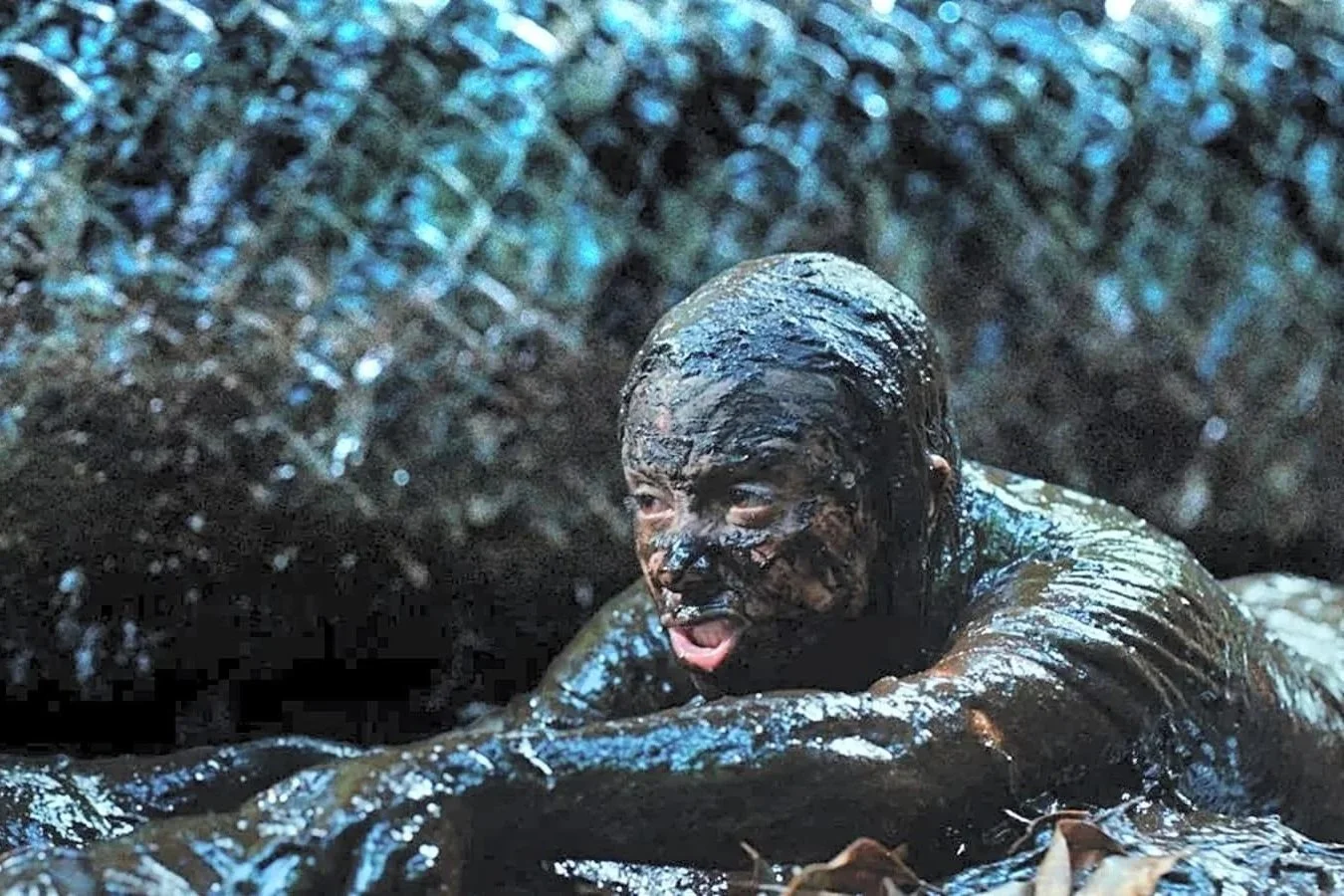
The biggest example that comes to mind are the iconic monsters from the RCI, none of whom are in this movie aside from zombies. Even then, once the film’s other monstrosities enter the picture, its breakneck pace only leaves enough room on the center stage for its deadlier threats. Although I’m glad that the film focuses on its more interesting creatures, it sidelines the only one connected to the games in the process. Even the dog in this movie is a separate beast from the zombie dogs seen throughout the games. This is actually because this film uses an original, unnamed virus as opposed to the T-virus integral to the RCI and its surrounding narrative in the games.
I have nothing against the new monsters in this movie. In fact, I actually think they’re really cool. But I would have preferred it if they were included alongside the T-virus and its creatures so that the movie was a bit more faithful to the games. As it stands, there really wasn’t any reason for Cregger to set his “Resident Evil” adaptation during the RCI aside from it being the series’ most iconic setting.
To someone who hasn’t played any of the games, I probably sound like I’m making a mountain out of a molehill. And I’ll admit, I think I’d be a lot more forgiving of all this had Cregger stuck the landing with this movie. Unfortunately, the ending sucks; it’s forced, narratively unsatisfying, and nothing like Resident Evil.
To put into perspective how much the ending ruined the experience I had with this movie, I’m going to use my changing Letterboxd score as an example (I know, I know, I’m a whiny nerd; just bear with me a second). Before the conclusion, I thought that this was easily going to be at least four out of five. When the credits rolled, I was seriously considering giving it two and a half. I ended up settling on three stars because the majority of it was too good for me to give it any lower, but I still wasn’t happy with the film.
It pains me, because I really want to love Cregger’s “Resident Evil.” However, I can’t get past how disappointing the ending is. Having said that, it’s proving to be very divisive amongst people, with many being unbothered by it. The longer I sit with the movie, the more I realize that I’m likely going to buy it on blu-ray and rewatch it because of how great the rest of the film is. It’s because of this that, if you were thinking about seeing the newest “Resident Evil” movie, I highly recommend that you do. I know that what I’ve written so far isn’t exactly a ringing endorsement, but if you don’t think the ending will bother you, then you’re in for a fine horror film.
There’s actually something to be said here about how this reflects the quality of many “Resident Evil” games. A flawless first portion, a weaker yet still very good middle, and an iffy finale. Perhaps Cregger has made a true “Resident Evil” movie after all?
Spoilers ahead
Ok, let’s dive into those final five to ten minutes. Having the movie end with the main character getting turned into a monstrous abomination is so uncharacteristically depressing for a “Resident Evil” story. Out of all the mainline games, I can’t think of a single one with a canonical bad ending. Even when the games feature a playable character who irreversibly mutates at the end of the story, it’s never as bleak as this.
Another issue I have with it is how Bryan gets sidelined in the process. Earlier I stated how Abrams’ performance as him carries the film, and that’s out of necessity. The whole movie up until now has been attached to Bryan at the hip, following him everywhere he goes. He had to be well-written and acted in order for the film to work, and thankfully he is.
However, that goes out the window during this last chunk of the movie. Although he’s still there, the movie switches its focus to the Umbrella scientists making the cure, with Bryan becoming the monstrous threat. This compounds how unsatisfying the ending is; I guess the film’s devotion to the core gameplay progression in each of the “Resident Evil” games stops just short of the part where the main character(s) makes it out alive.
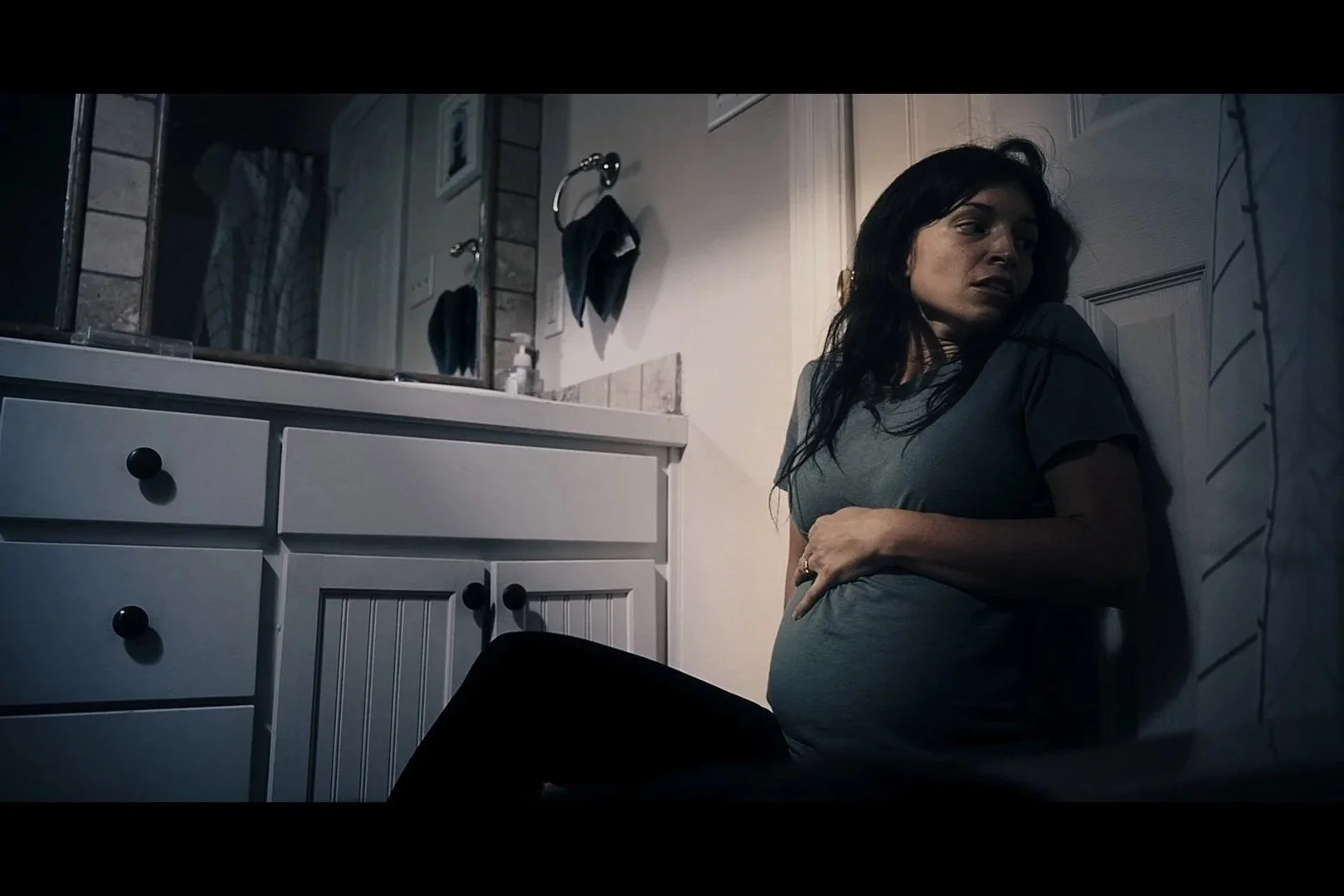
I can sort of see the intent behind it. Bryan struggles with a fear of change throughout the movie, with a subplot about how he’s too scared to give a proper response to his girlfriend’s accidental pregnancy before he ends up taking the overtime job that sends him to Raccoon City. In a way, the ending completes this arc, with him “embracing” his change into a monster.
There are a couple problems with this interpretation though. For one, this wasn’t exactly his choice. It was like the movie was trying to force this ending to happen, with Bryan’s drive to survive getting its tires popped and all of the scientists taking too long to cure him.
The second problem is that this ending completely disregards the themes of fatherhood that the film has established up to this point. At the start of the movie, Bryan is afraid of the idea that he’s going to become a father. Throughout his journey, he deals with horrors that are representative to these fears.
The first monsters he encounters are a family unit composed of a wife, husband, and dog that live on a farm at the outskirts of the city. After “killing” the husband and wife, the two merge together into one creature. As the film goes on, they add more bodies to their “family,” increasing in size as they continue to pursue Bryan. He handles them much like the other family he accidentally started; he runs away, unable to face them for the time being.
The second monster he faces is a little girl who’s been bitten in the foot by her infected mother. Although she hasn’t fully turned yet, her foot has already mutated. Bryan offers to help her, but hesitates when she holds her arms out to be carried. When he begrudgingly accepts, the foot attacks him and the scared child finally turns. Bryan is forced to kill her, though not before she manages to bite him.
Later, Bryan encounters an abnormally large man in the sewers that gives birth to a horde of mutated rats. Bryan dispatches them with the firepower he has now acquired, only for them to merge together like the human rat king “family” he accidentally created back at the farmhouse. Again, he runs away.
When Bryan reaches the hospital’s parking garage, he realizes that the bite from the little girl has indeed infected him. Upon seeing a stick figure family in the corner of a car’s rear window, Bryan records a final message for his girlfriend. He confesses to being afraid of change, he apologizes for being too scared to give her a real response when he could, and he says that he does want to be a father with her and that she’ll make for a great mother. Here, Bryan finally confronts and overcomes his fears of fatherhood.
This is reflected in how he deals with the horrors he faces after this point. When he encounters the human rat king in the hospital’s elevator shaft, he’s more annoyed than scared. Instead of fleeing, he grabs an acid-barfing zombie and weaponizes its puke against the rat king, sending it falling down the shaft before it catches itself and escapes onto a lower floor. Bryan is then forced to go through the infected nursery in the maternity ward. He tries to sneak through at first, using a mop he found outside to gently push the hospital bassinets out of the way. However, when the blood-red boils begin bursting with zombies and mutated babies, he wastes no time swatting them away as he escapes onto a deteriorating skybridge.
This culminates in the final confrontation. The maternity-monstrosities attempt to break through the door that Bryan barricaded with the mop handle, and the human rat king is seen scaling the side of the building, both trying to reach him. He doesn’t run though. Steadying himself, he fires his last bullet, breaking the improvised barricade. All of the monsters from the nursery spill out the side of the building, falling onto the rat king and knocking it off on their way down. Their descent ends with a bloody explosion on the concrete below, reducing them to nothing but puddles on the pavement. Bryan finally won.
And what happens to Bryan after he goes through all of that? What conclusion does this character get following the development and growth he experienced? He delivers the package needed to create the cure, only for a comedy of errors to cause his life and the cure to be lost. I’d call it an abysmal payoff, but that would imply that it pays off the themes set up by the film at all, which it doesn’t.
Could you make the argument that the virus is a metaphor for family, and that once it had infected Bryan, he couldn’t escape no matter how hard he tried? Sure. But then you’d have to ignore the fact that he ALREADY overcame his fear of starting a family while he was trying to reach the lab at the hospital. It is beyond frustrating that his character undergoes everything that I just described, only for the movie to say that it didn’t matter and kill him off. If they wanted to go for a classic “Evil Dead”-esque ending, then why bother with all that? Why not just keep him a loser and tone down the serious themes? I don’t understand it.
Ultimately, I really don’t know how I feel about Zach Cregger’s “Resident Evil.” While I love 90% of it, the awful ending holds it back from being the truly spectacular film that it could have been for me. What a terrible shame. At least we can count on Constantin Films to release another “Resident Evil” adaptation sooner or later so they can hold onto the film rights. On the other side of things, I’m sure Cregger’s next movie will be better now that he’s sworn off of franchise films after his experience here, for better or for worse.