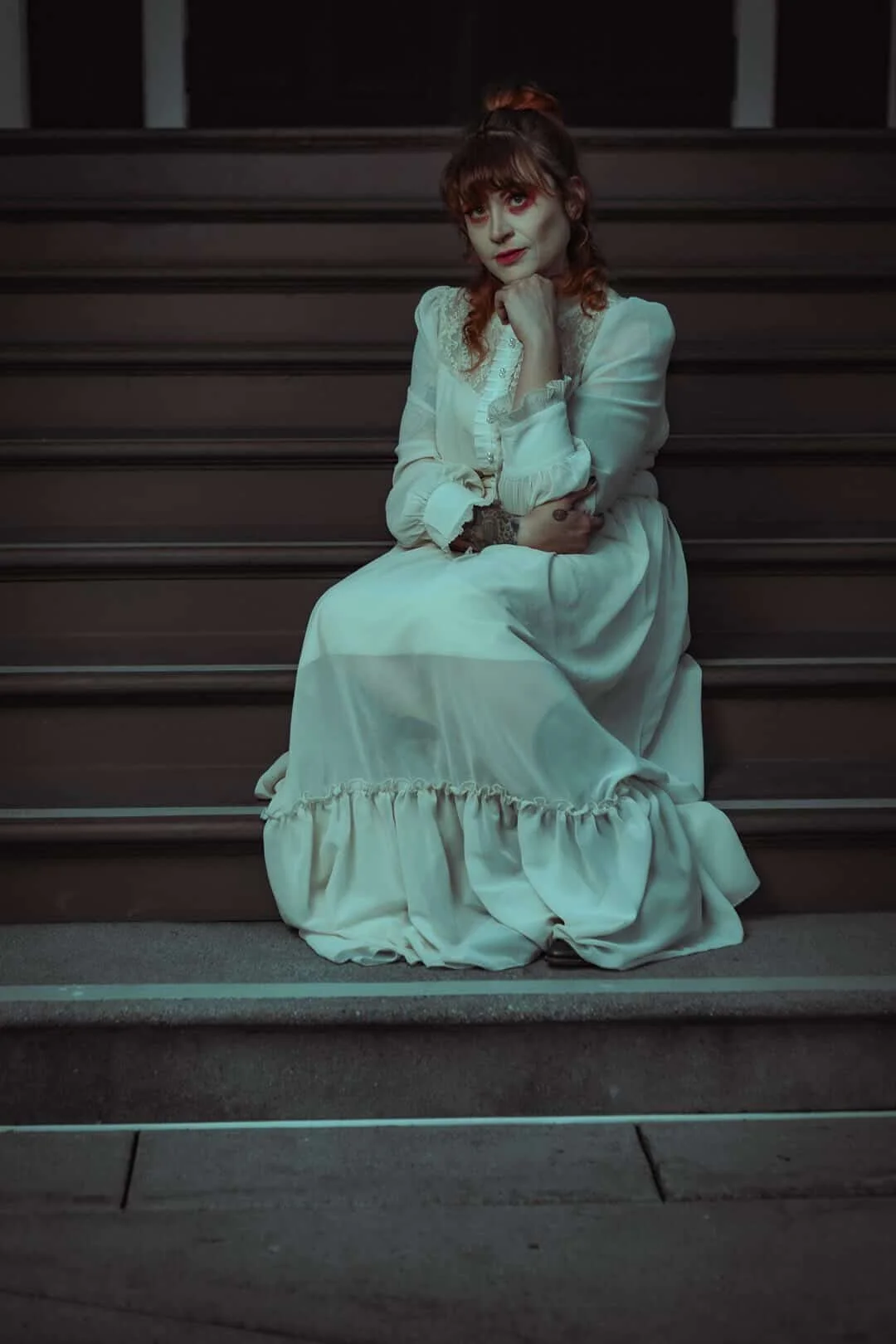
The Summoning of Baby Blue is disjointed in its presentation
The Summoning of Baby Blue starts off with a creepy short story involving a confused driver and a disappearing then reappearing scarecrow, before transitioning into the main storyline of a babysitter watching over a newborn for two young parents.
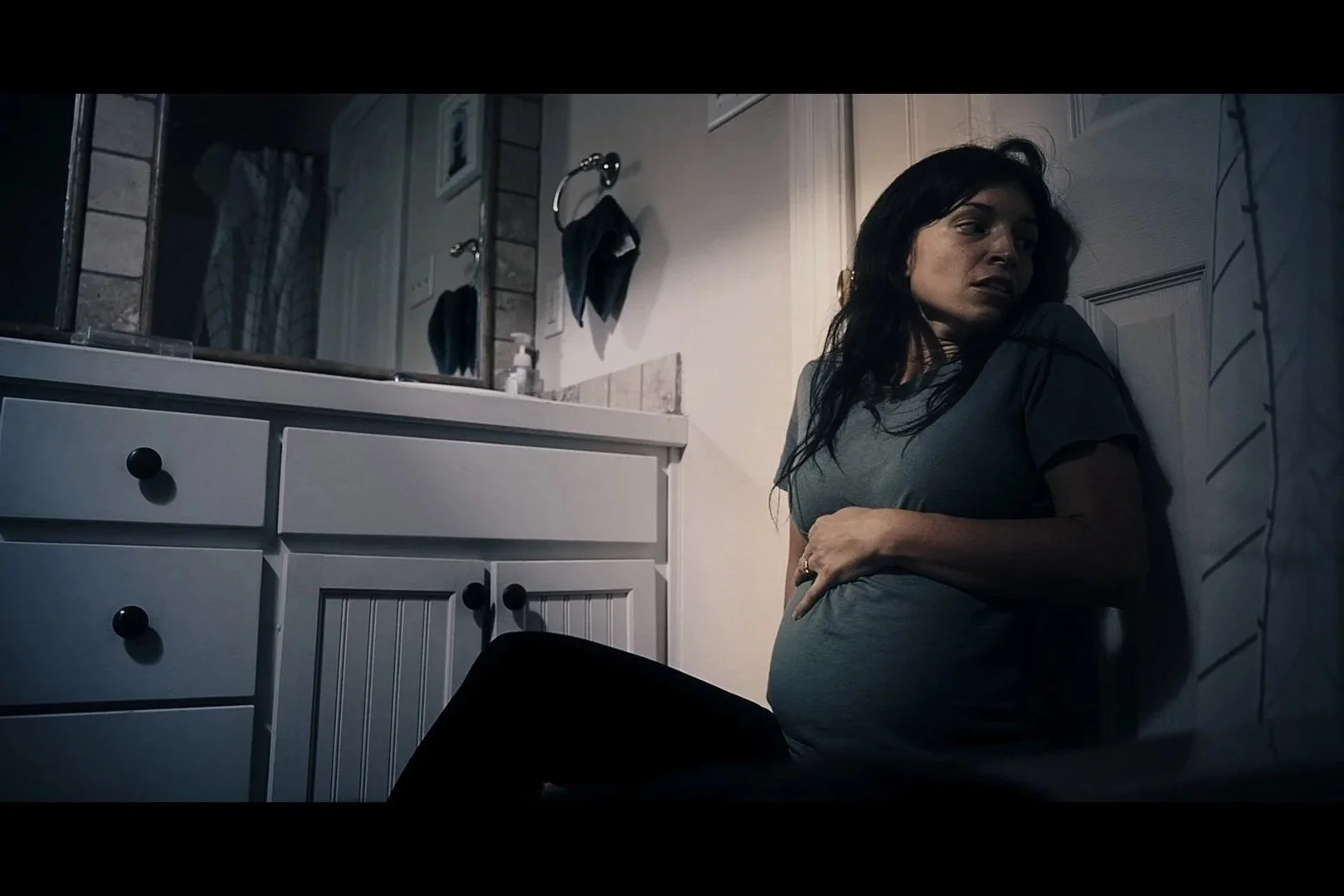
I couldn’t gauge the age of the main antagonist; possibly late teens or early twenties. While sitting on the couch casually chatting on the phone with a friend, she receives a mysterious phone call that immediately gives off Scream-style vibes. The terrified babysitter slowly realizes that it’s out to be a prank, planned by her two friends that show up on her doorstep. The two friends, disappointed in their friend not being able to go out, decide to keep her company into the late hours.
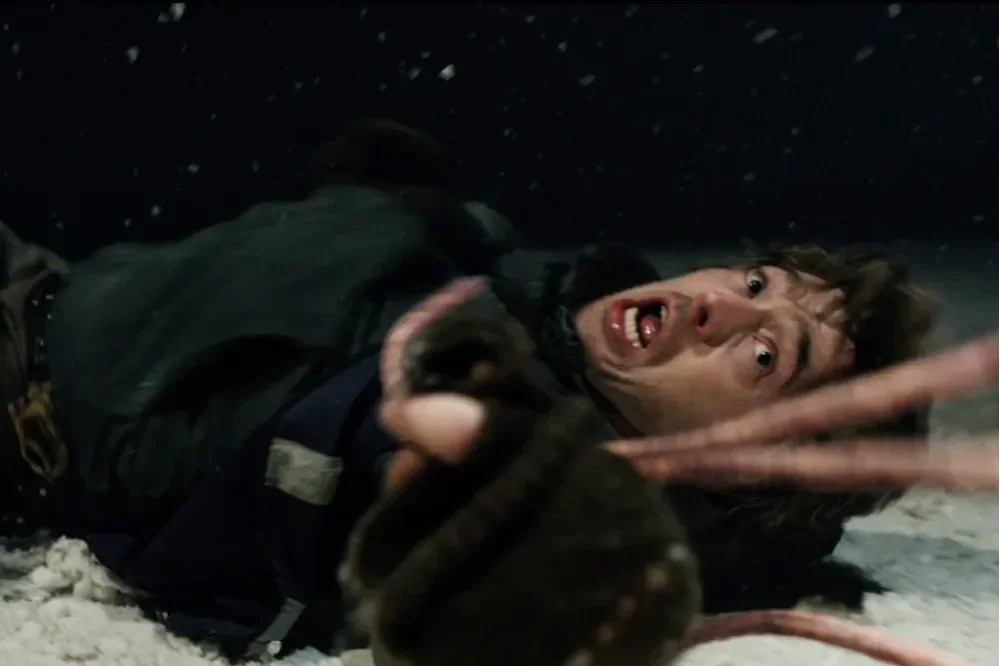
The group begins discussing an internet urban legend about an entity called Baby Blue, a malevolent spirit searching for her lost baby. According to the ritual, you summon her by telling a horror story into the mirror in pitch black darkness, holding your arms out as if cradling a baby, and repeating “Baby Blue” thirteen times. As each friend takes their turn telling a story, the film shifts into a series of horror shorts, with Baby Blue slowly becoming more present as she searches for her child.
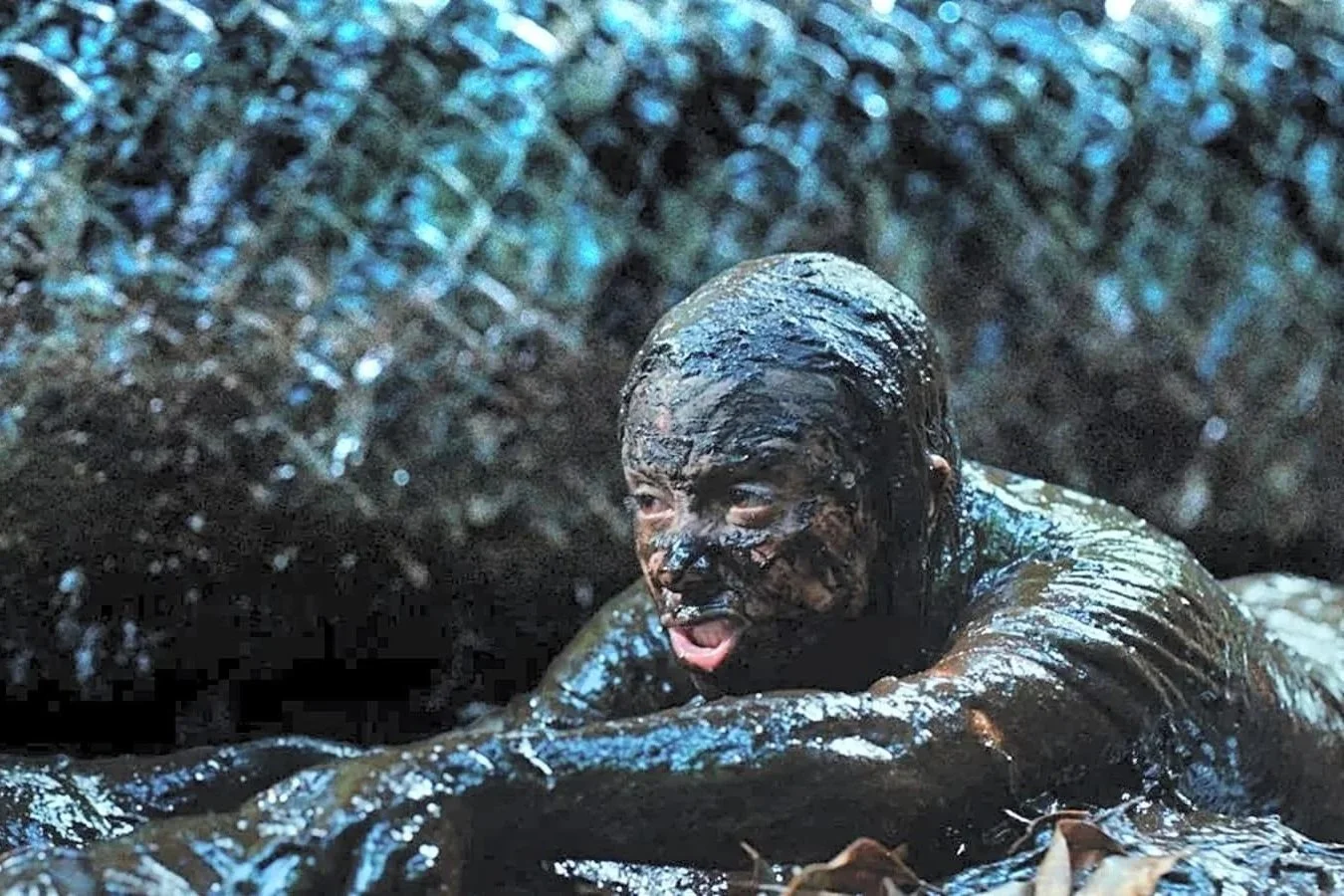
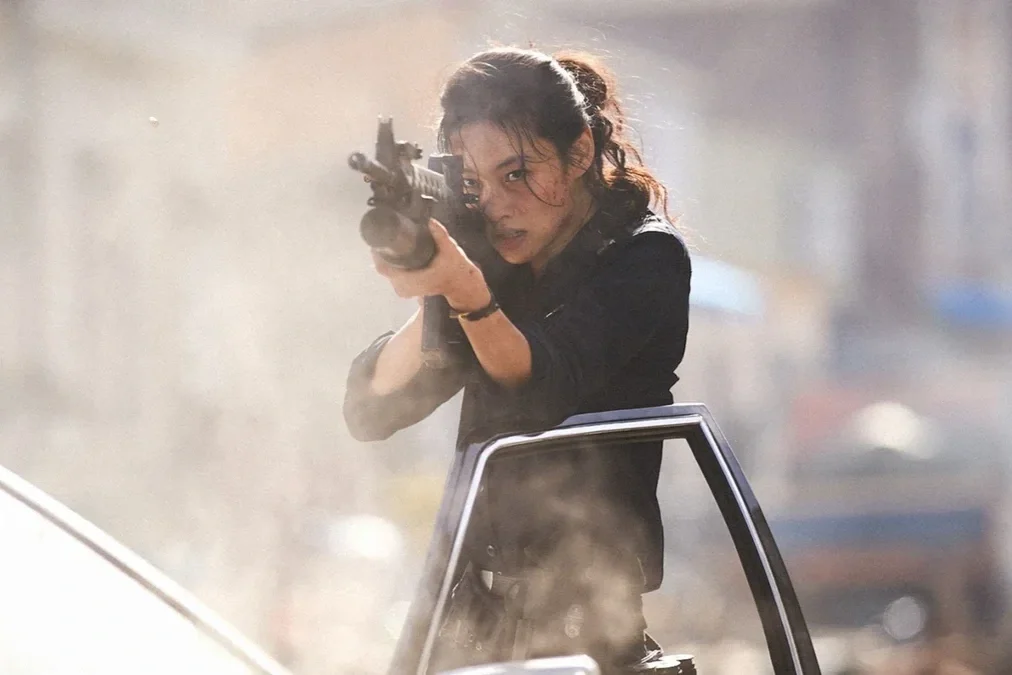
One thing I appreciated was the variety of horror influences throughout the movie. It gave off strong Tales from the Crypt anthology vibes, with each story bringing a different style and vibe. You can clearly see influences from a number of iconic horror films along with some Hispanic lore of La Llorona. I also thought it was really awesome that multiple writers and directors contributed to the different segments, which gave each story its own personality and overall creative contribution to the movie as a whole.
Yet, I felt the overall structure lacked cohesion. The transitions between stories were often confusing; the film would abruptly move from the bathroom mirror setup into an entirely different storyline without hardly any introduction or context. Personally, I think it would have worked better if every time someone stepped in front of the mirror each storyteller started into the tale, as it would’ve served as a stronger introduction into that segment. Instead, the stories often felt disconnected from the main plot and never really tied into what was happening in the main storyline.
Another issue was that most of the stories never really had an ending. They would build suspense, introduce interesting concepts, and then simply stop. There wasn’t much payoff, which made several of the short stories feel incomplete. The final story was especially confusing because it wasn’t entirely clear whether what we were watching was another tale being told or part of the main narrative.
The ending itself relies heavily on shock value. Throughout most of the film, there wasn’t a strong sense of fear or intensity, although it did keep me curious enough to see where everything was leading. When Baby Blue finally appears and the babysitter becomes possessed before taking the baby, the conclusion feels more confusing than satisfying, while also leaving you on a confusing cliffhanger.
Overall, The Summoning of Baby Blue is an interesting concept with some creative ideas and a fun anthology theme. The involvement of multiple writers and directors gives the film variety, but it also contributes to its biggest weakness: a lack of connection between the stories and the main characters telling these stories while living out a horror themselves. While there are moments of intrigue and some effective horror imagery, the film struggles to create a consistent narrative or emotional connection with the audience.
In the end, it feels more like a collection of loosely connected horror stories than a fully realized film which leaves the ending open for continuation or disorientation.