On ladies and Lynch
To state the obvious, sometimes it can be a strange, unfair, and uncomfortable thing to be a woman in this world, let alone a woman who loves movies. All too often, I grew up seeing portraits of girlhood and womanhood that looked little to nothing like how I felt, and that’s when they were there at all.
There is an understanding of women as being defined by how attractive we are to men that has plagued us for centuries. To be defined only by what one can see, and to have that definition decided upon not by you, but by men over time and across nations who have been born with unearned power over you.
What many movies do – and indeed much of media in general – is reinforce this notion. This looks different for different women. I know that my experiences with my identity and intersections will not be the same overall as any other woman’s, and generally speaking race seems to be a big divider of these experiences, let alone the horrific realities faced by transgender women – and even this is disproportionate in its negative effects on BIPOC transgender women compared to the transgender U.S. American population as a whole.
White women have been defined in the U.S. American mainstream culture as the pretty, dainty, perfect property of whatever powerful man they are in proximity to – most often, white, cisgender, heterosexual men who are their fathers, brothers, or romantic partners. There is a surface, performed, curated manner in which the male gaze offers female representation in film. This looks like objectification, like defining us as the property of men, like seeing our bodies as inherently sexual because of those men but also seeing us as having no agency or liberty with that sexuality or body. What is odd, is that there are some aspects of this dynamic that I’ve only seen undermined very rarely in film, and multiple times those films were made by David Lynch (who was – famously- a man!).
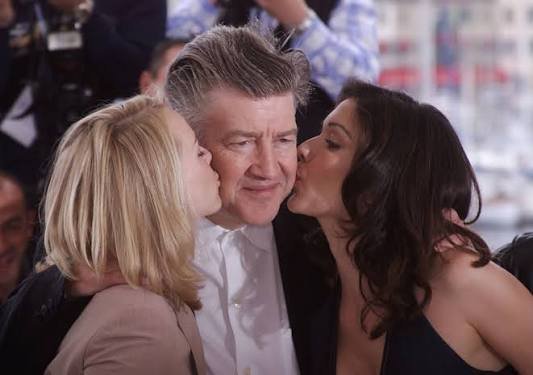
In Lynch’s films I have found a catharsis that is hard to articulate effectively. I suppose in a sense, this catharsis is what many people must have felt at seeing Lynch’s pattern of criticism towards the white American curated suburbia – his showing of what lies beneath those perfect front lawns and pristinely white fences. In some ways, whether he meant to or not, he did some similar work when it came to gender. He was a man who clearly loved women, as many of us learned over and over again anytime we heard his female cast, crew, or family members (and even some ex-girlfriends or wives) say in his memoir/biography “Room to Dream”, in many interviews, and so on. He was a man who loved women beyond what they could do for him, though. He loved us beyond appearances and sexuality, without ignoring those things in the process.
In horror and horror-adjacent films, there is a frequent and not entirely unfounded criticism of how women are represented. There seems to be an overabundance in the history of the genre of sexist displays through visual and thematic language which makes being a fan of the genre as a woman and a feminist a sometimes uncomfortable, despairing thing. It is a reminder that the desirable norm is the white, able-bodied, cishet man, and that you are defined by them within art and outside of it. It is a reminder of – despite how many women there are in the world – that nagging feeling of being “othered” or seen/treated as “less than”. When you get right down to it, it’s a matter of bigotry combined with a lack of skill. Many films that have characters who are male-gaze approved who are female also have shotty writing in the overall plot and other characters too.
I’ve had a tricky, nuanced journey with Lynch when it comes to this topic. I found his films to be offensively sexist in the past, and it’s taken a lot of learning, time, rewatched, and thought to get more clarity on when that is and isn’t true. Sometimes I still see it, other times I see how he is using the male gaze as a point of view for a misogynistic character (this is certainly the case with “Lost Highway”, for example, which is a film I love but still struggle with in terms of how it deals with gender). The line between subversive criticism and engaging in the same societal ill that you are seeking to criticize is an incredibly tight rope to walk, and no one will do it perfectly. This does not negate the role of criticism here, in fact it enhances it. Where we can see women being represented best in his work is why we can also spot when his likely sincere efforts may fall short in other moments or characters.
Another reason I struggled with his representation of women is that it was – despite the chasms of differences – confronting something within me that I simply didn’t want to. It was the struggle of a shifting identity that sometimes made you feel as if living in a dream. It was the reality of being a survivor of very specific gendered violence and trauma. Sometimes seeing something that familiar can trigger you, and make you wish to avoid the thing all together. Laura Palmer, for me, is as real as she is fictional. I have felt over time a great sadness, anger, and admiration for her. For me, she is not just a character, and this is a sentiment that many women and girls have expressed over the years. She stays with us because she reflects experiences and truths we are burdened with hiding for men who harm us. She stays with us because of how she both was brutalized by evil and violence, and yet had a complicated but sincere heart that made her capable of being selfless in a crucial and tragic final chapter of her short life.
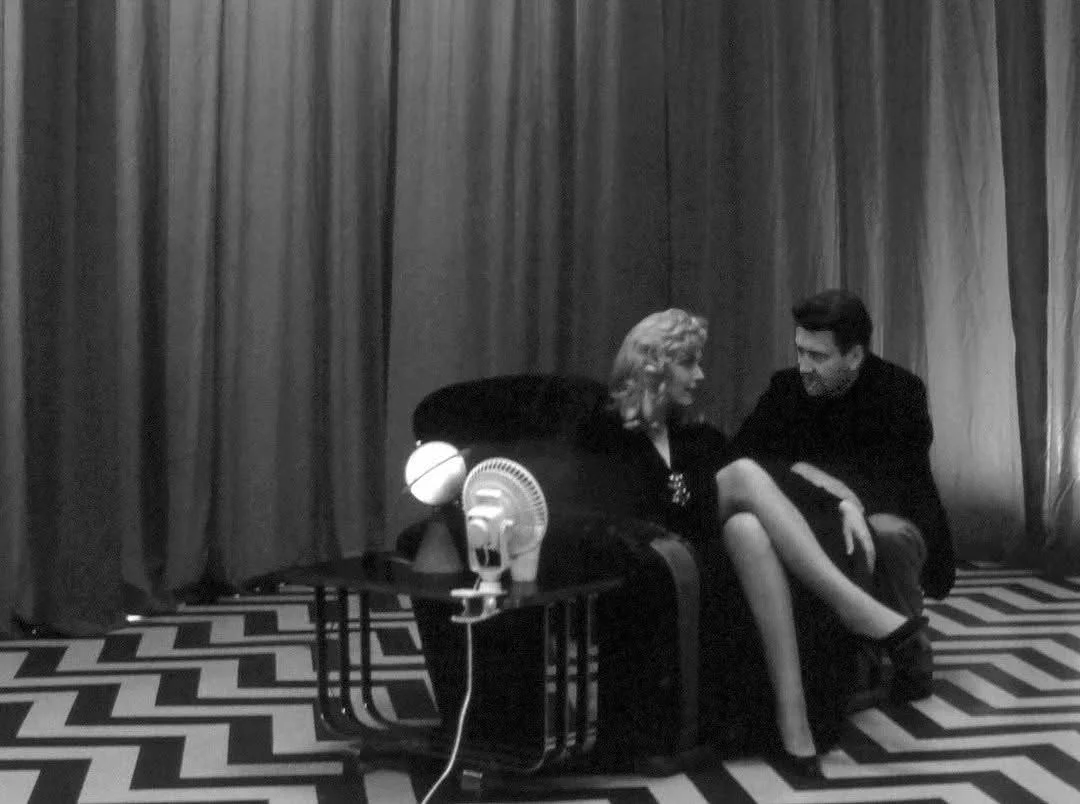
When Laura tries to protect Donna in “Fire Walk With Me”, we see the female friends, older sisters, and other women who fear we will be harmed as much as they have been, and yet feel powerless to stop it. We see ourselves in her too. I have been a victim of things not entirely unlike Laura’s experiences, and I have also been saved from harm by a young woman who was a victim too. When Laura tries to project strength and sexual maturity, we see a young girl who has been adultified in the most heinous ways, and wants to feel some kind of control or armor within and around her. One of the most powerful moments in “Twin Peaks” for me is the Season 2 finale, because Laura finally got to be heard. There was no avoiding the screaming, the pain, the sorrow any more. This was doubled, and tripled down on in the film which followed it (“Fire Walk With Me”) and even touched very importantly on more than once throughout “The Return” (aka Season 3). When Laura is screaming in the red room, she is letting out a primal thing that so many of us have had to suppress for our own safety or well being. She finally got to be heard, and there was no avoiding it – not for Dale, and not for the audience.
The complexities of female identity and experiences are explored many times in Lynch’s work though. This is part of the great reward I’ve had in sticking with his work despite at first thinking I hated it, or that it wasn’t “for me.” You see over time a seemingly brilliant and boundless empathy. Experiences and feeling which Lynch could never have had himself, he somehow taps into in his storytelling in a way that continues to confuse and impress myself and many others over the years. Women are interesting to Lynch in a way that feels empathetic rather than isolating. It’s not a fixation, it’s not a dehumanizing fascination, it’s a sincere and vibrant curiosity which our world could use so much more of. Curiosity is the thing which made Agnes Varda such an incredible storyteller as well, and I wonder sometimes what a conversation between Lynch and Varda would have been like considering how creative, curious, and compassionate their films are at their best.
To make the dreams and world which Lynch did in “Mulholland Drive” and “Inland Empire” all revolve around and originate from a central, detailed female main character is no small thing. It is a recognition of our humanity. An acknowledgement of our capacity for the full spectrum of morality and thought. It is an unvarnished look at what women are capable of (including horrible things, but not limited to that) that many male filmmakers before and since Lynch could learn a lot from. We are not made up of our traumas, but our traumas are fully recognized and respected despite the surrealist and abstract nature of his films. “Women in trouble” is what he did best as a story teller, but those women also sometimes were creating trouble for others. We are not held to a higher – or lower – moral standard than his male characters.
It’s no coincidence to me that Maya Deren was almost certainly a huge influence on Lynch (see her short film “Meshes of the Afternoon” for a golden example of this) – one of the pioneers of cinematic surrealism and surrealist art. It’s also no surprise to me that Lynch was a fan of Alfred Hitchcock, who often had films with female characters that are actually engaging and interesting even as a modern viewer. Howard Hawks of course gets more shine for that sort of thing, but I see it in Hitchock and Billy Wilder films too. Maya Deren dealt with the ever-changing and elusive concept of identity in her films (especially “At Land”) through a female gaze, and Lynch learned from her and many other filmmakers the value of such a thing. Despite the great American myth of individual excellence, art and artists exist on a continuum. All artists are products of their time and place, of the art existing before and during their lifetime, and will be an influence and part of what comes during and after their life on earth. Lynch is great, and part of his greatness is how he recognized himself as a part of a larger pattern and practice that had meaning and value beyond himself. Our individuality is not a myth, and it certainly can be a strength in moderation and wise application, especially as an artist, but to pretend that art comes out of a vacuum is to ignore something as time tested and obvious as the concept of gravitational pull. Every artistic action has an equal and an opposing artistic reaction.
Women and grief is a subject I could spend a lot of time writing about. Most adults are no stranger to loss, but there is an expectation of women when it comes to grieving that we are more sensitive but also need to be somehow “demure” and “private” about our grief. We must get on with the business of daily life immediately, and while this pressure is applied more obviously to men (who are told they are “less of a man” for showing emotions like grief), it is applied insidiously to women. We are often shown as hysterical, evil people capable of causing great harm to others as a result of our grieving, (this is the case even in films I like or love sometimes, like “Hereditary” or “Midsommar”). Horror movies have made a cottage industry out of female rage in a manner that is at times as dehumanizing as grief is debilitating. Lynch, instead, found room for grief in both male and female characters in his stories. In “The Straight Story,” Alvin Straight is allowed to show profound grief. It may be momentary, but it’s memorable and valuable. John Merrick is shown as having a deep love and quiet grief with regard to the death of his mother in “The Elephant Man.” Diane Selwyn concocts an entire world to avoid her guilt, regret, and grief in “Mulholland Drive.” The “Log Lady” Margaret Lanterman literally carries a symbol of grief with her everywhere she goes since the death of her husband in “Twin Peaks.” What you find out if you pay close attention to Margaret is that she is no fool; she is wise, human (for better and in some small ways, for worse), intuitive, and she had a unique and profound connection to Laura Palmer, who is the most important and central figure in the Twin Peaks universe. She was perhaps the only adult who showed – in her own way – concern and care for Laura as shown in “Fire Walk With Me.” She speaks of the night of Laura’s death with a profound tone of palpable horror and sadness. It is one of the most interesting and layered characters and performances I’ve ever seen, particularly when you move into Season 3 of “Twin Peaks.” As Catharine Coulson – who let’s not forget, was the Assistant Director on David Lynch’s first feature length film, “Eraserheard”, was once married to one of Lynch’s dearest friends (Jack Nance), and was a crucial part of Lynch’s starting to practice his beloved Transcendental Meditation – herself is dying of cancer, we got to see Lynch and Michael Horse grieve her in their own ways on and off the screen in real time. She famously says to Hawk “You know about death. That it’s just a change, not an end.” She also says one of the most beautiful sentences I’ve ever heard in anything; “The stars turn, and a time presents itself.” Truly some of the best dialogue in Twin Peaks as a whole comes from her mouth, and while her life was leaving her, she got to grieve a character she loved playing who also faces death.
I am forever thankful for the filmmakers and storytellers – like Lynch – who helped me to feel less alone, more seen, and valued even if it was in an abstract fashion. My yearning to make my own films is in no small part due to seeing how much filmmakers like Lynch and Greta Gerwig enjoyed being directors. My art and my life have benefitted from the privilege of experiencing the art and women of Lynch’s dreams, and for that, I will always feel grateful for the distant, tenuous connection I feel to him as a fellow artist.