MAJOR SPOILERS FOR ‘The Village’ (2004)
M. Night Shyamalan is a contemporary king of twists and sharp turns, with many of his films relying on narratives that deceive and yank from under the audience’s feet. While Shyamalan’s films don’t always achieve critical success, they are cult favorites, often reconsidered critically years after their release. 2004’s The Village is a perfect example of this, receiving a series of tough reviews upon initial release that resulted in the film having an abysmal 43% on Rotten Tomatoes; however, the film was a box office hit, making 5x its sixty million dollar budget. But after rewatching The Village, the question of whether critics simply misunderstood the film persists.
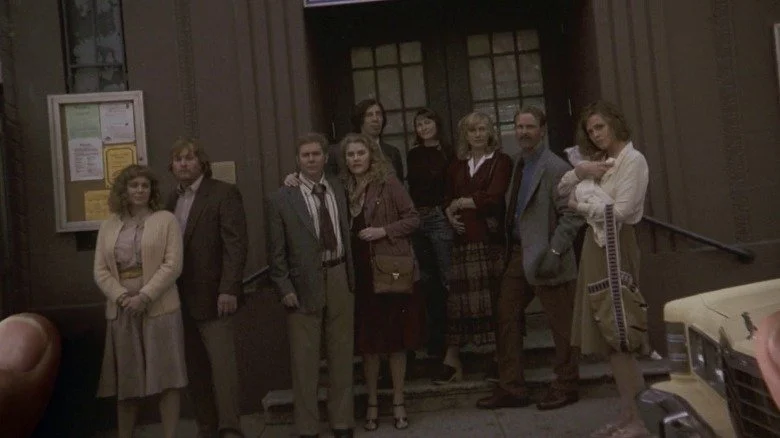
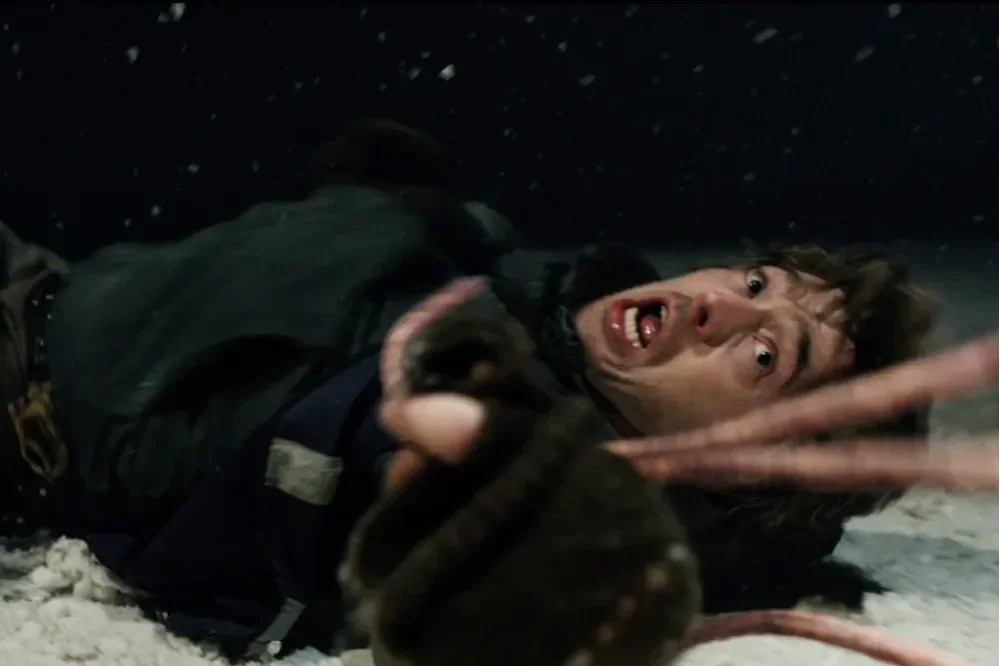
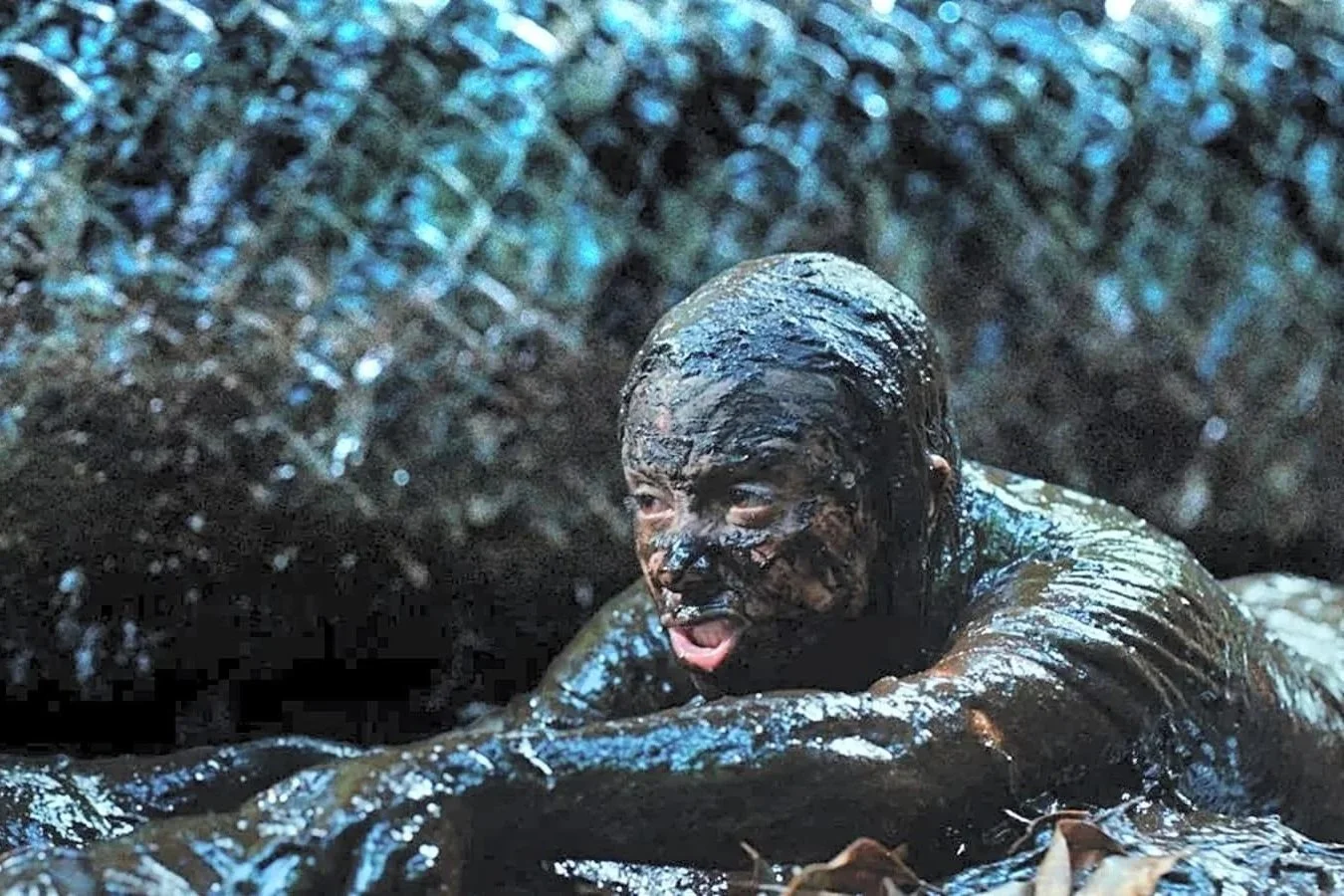
The Village focuses on an isolated rural community whose world revolves around simple life and protecting the town’s peace from creatures who live in the nearby woods, known as “Those We Do Not Speak Of.” Life in the village centers around community meetings, agriculture, and craftsmanship, only interrupted with regular drills on the off-chance that the creatures venture out of the woods. Joaquin Phoenix stars as Lucius Hunt, a young man who attempts to convince the village elders to do the unspeakable and allow him to venture to nearby towns for medicine and supplies. While the village elders quickly reject Lucius’ proposal, the youth of the village find themselves increasingly drawn to the woods, with the mentally handicapped Noah Percy (Adrien Brody) regularly sneaking into woods. Upon Noah returning with a kind of berry Lucius doesn’t recognize, Lucius reports Noah to the village elders. Soon after, “Those We Do Not Speak Of” raid the village, forcing the village people to quickly respond to the threat and hide from the creatures and increase the strictness of the community’s rules.
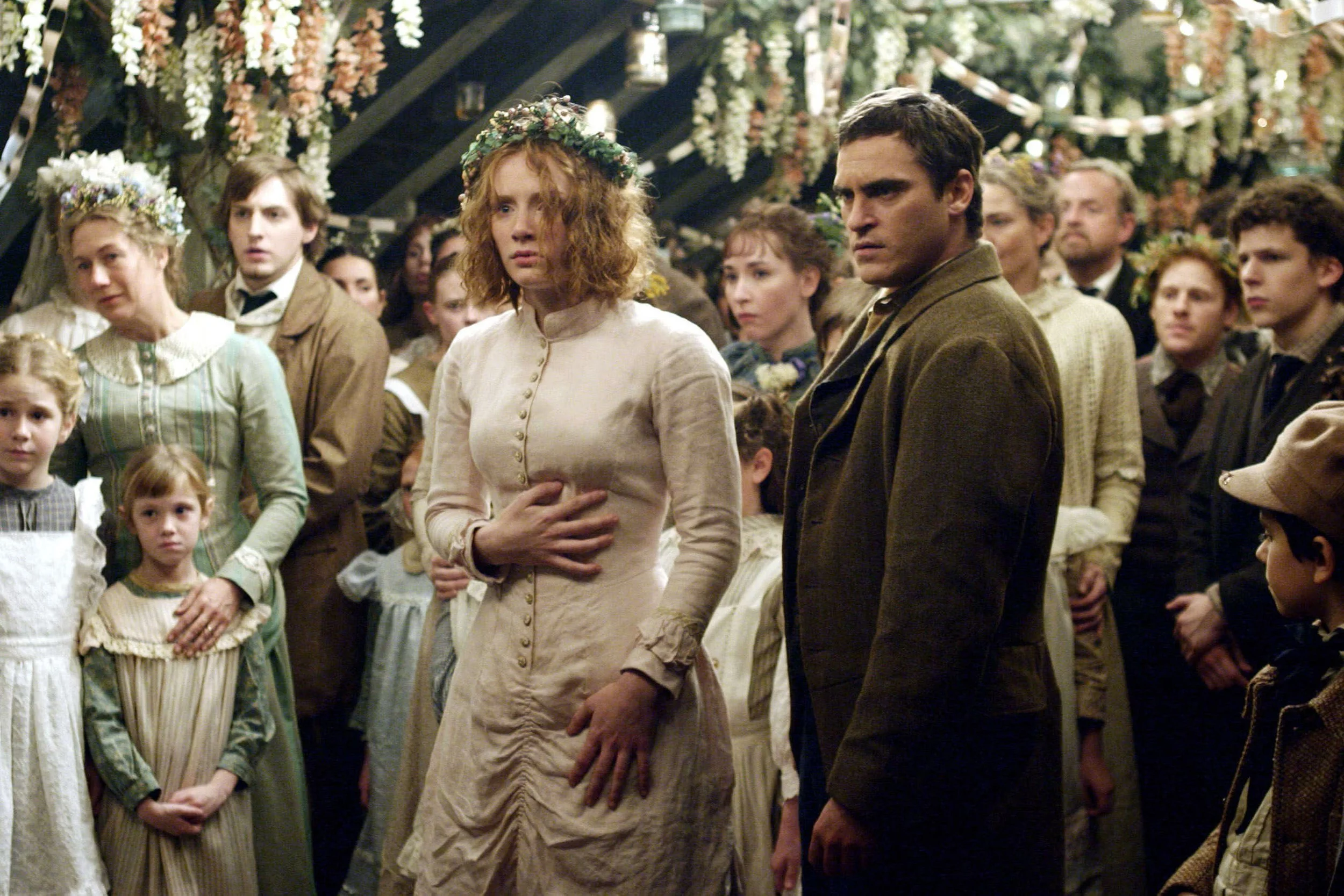
As the attacks escalate, Lucius finds himself romantically entangled with Ivy Walker (Bryce Dallas Howard), a blind woman who is the daughter of the village’s founder. As Lucius and Ivy’s relationship intensifies, Noah finds himself jealous of Ivy’s affection for Lucius, mistakenly stabbing his friend after learning that Lucius’s feelings for Ivy are mutual. As Lucius’ wounds become infected, Ivy demands to undertake the journey through the woods to find medical supplies. Despite attempts by the village elders to stop this journey, Ivy finds her way to the edge of the woods, scaling a vine-covered wall only to be discovered by a park ranger who sees her in distress, and decides to help her and get the medical supplies. While Ivy’s blindness prevents her from seeing how modern everything outside the woods is, we learn the village elders founded the village as a means of escaping contemporary life, abandoning modern life and the tragedy and violence associated with it to form an agricultural society set a hundred years in the past, and orchestrating “Those We Do Not Speak Of” to terrify the village’s youth into not discovering this truth.
While this twist was initially critically panned, upon rewatching the film, I found myself resonating with the justifications given by the village elders. The decision to abandon modern society comes as a reaction to the world harming, corrupting, and killing those the village elders love most, forcing them to choose to participate in an experiment to protect their kids from the dark influences of the modern world. If The Village was released today rather than in 2004, it might’ve been better received, considering that our current political climate teeters towards totalitarianism, ignores the realities of climate change, and continually marginalizes and demonizes minorities. As the United States finds itself entangled in yet another war in the Middle East and civil rights are eroded on the daily, the question remains: who wouldn’t run away to the woods if they had the choice to do so?
While The Village frames the village elders and their elaborate ruse of “Those We Do Not Speak Of” as villainous, it is not out of cruelty that they try to persuade the village children to stay within the village. Rather, they fear that the revelation of the modern world outside their woods would cause their social experiment to come crumbling down around them. In one scene, Ivy’s father ponders what could be done to save Lucius by “any means possible”, only to be shut down by the town’s doctor and Lucius’ own mother who insists they must stick to their oath regardless of who might be lost. In this society, nothing triumphs the maintaining of this isolated “utopia”; but in an increasingly violent and hateful world, the abandonment of modern comforts is worth keeping the town’s people safe. While the film criticizes this position, the question remains that in a world that is increasingly hostile, who wouldn’t choose to leave for a more peaceful, more community-focused living in a society that is divisive, individualistic, and centered around making money and productivity.