Train to Busan - Remastered and Revived
At the height of the zombie craze in 2016, many of us came to know AMC’s The Walking Dead. Based on the comic of the same name, it was a captivating, heart-wrenching and strong piece of horror media that still holds up to this day. And if you’re that interested, you’re watching one of the several spin-offs that aired in the time since its finale.
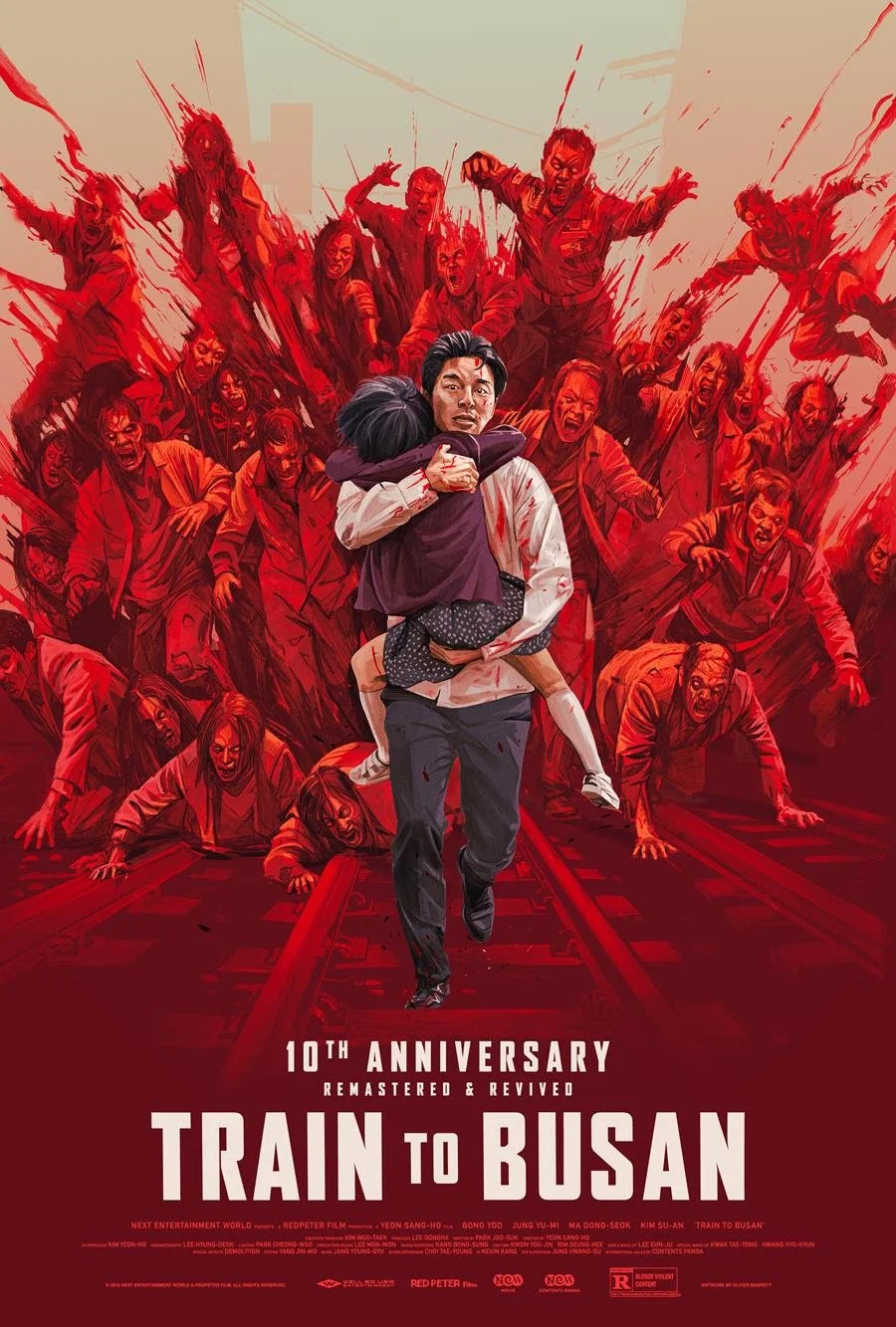
On the other side of zombie horror, and coming to life outside of the US, was another title. Helmed by director Yeon Sang-ho, the exciting and emotional Train to Busan was recently brought back to screens for the 10th anniversary of its release. In what was his very first live action film, Sang-ho took advantage of something he felt Korea was lacking - genre films. He dedicated his time perfecting the characters we meet throughout the solid 118-minute runtime that results in a group of leads that every member of an audience can care for, hate, or merely understand.
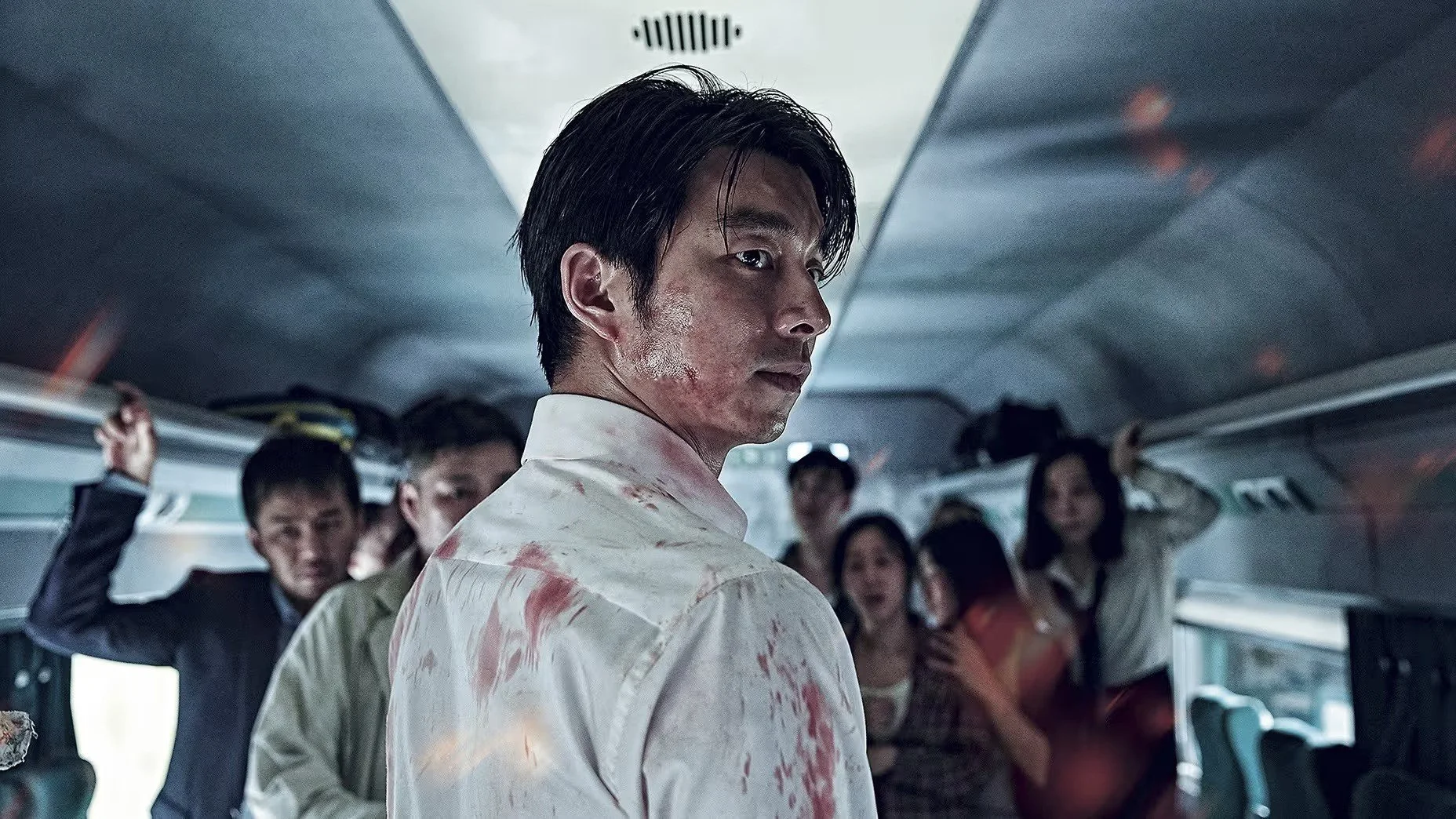
Gong-yoo as Seok-woo in Train to Busan
In typical zombie movie fashion, we’re given hints about an impending doom - a deer struck by a truck seemingly crawls away unscathed, riots breaking out through newscasts; and of course there’s Patient Zero who stumbles onto a train that our leading cast are also traveling on. We first meet the cutthroat and borderline absentee father, Seok-woo, who pays no mind to his young daughter, Su-an, who traverses the train without him in search of the bathroom - and truthfully, some company. The relationship is tainted by Seok-woo’s care and dedication to his high-earning job over his family, which at some point caused the crumbling of his marriage, leading him to begrudgingly take Su-an on a train ride to visit her mother for her birthday.
The trip is ruined, and then some, when our first infected rider attacks the train attendant who believes her to be having a seizure. The infection is fast moving, far beyond the slow moving zombies that Rick Grimes is used to, leaving dozens of train riders to be turned within minutes. In the re-release’s bonus content, Sang-ho discussed how they tried more practical effects but found that they hid the actor’s faces too much and desired to keep them recognizable post-infection, hence the simplified appearance of white eyes and black veins instead. The movements were also methodically planned, with a breakdancing choreographer being hired to coach the actors on the sharp, blunt and “snapping” like movements. Both choices, though small, are some of the most iconic and memorable pieces of the film’s memory.
Beyond the fast moving zombies and knowledge that the survivors have no help awaiting them at each train station, we see each of our main cast with their own takes on means of staying alive. Seok-woo finds himself at odds with soon-to-be parents Sang-hwa and Seong-kyeong after instructing Su-an to only care for herself, despite her pleas to her father to help keep everyone safe. The tension builds in each direction as groups form, with each person declaring they are either correct for their choices in either wanting to protect each member of the train or exiling those they deem a danger to survival.
Sang-ho explained the writing process to be an interesting one, as the single location being something mobile caused him to understand that the characters must stand out amongst one another. No two people could be the same, resulting in a blend of personalities that evolve the film each time they lose someone. Sang-ho also took a specific approach to the technical aspects of keeping the audience focused without causing actual distraction. He was keen on replicating the details of a true KTX (Korean Train Express) while expanding for the sake of the action; particularly for the swift sequence in which three of the male leads must enact a rescue mission between several train cars full of infected. Sang-hwa, played by Don Lee, is a trained martial artist in his time outside of acting, allowing for his stunts in particular to feel larger than life as he literally tosses infected passengers and uses them as weapons against each other.
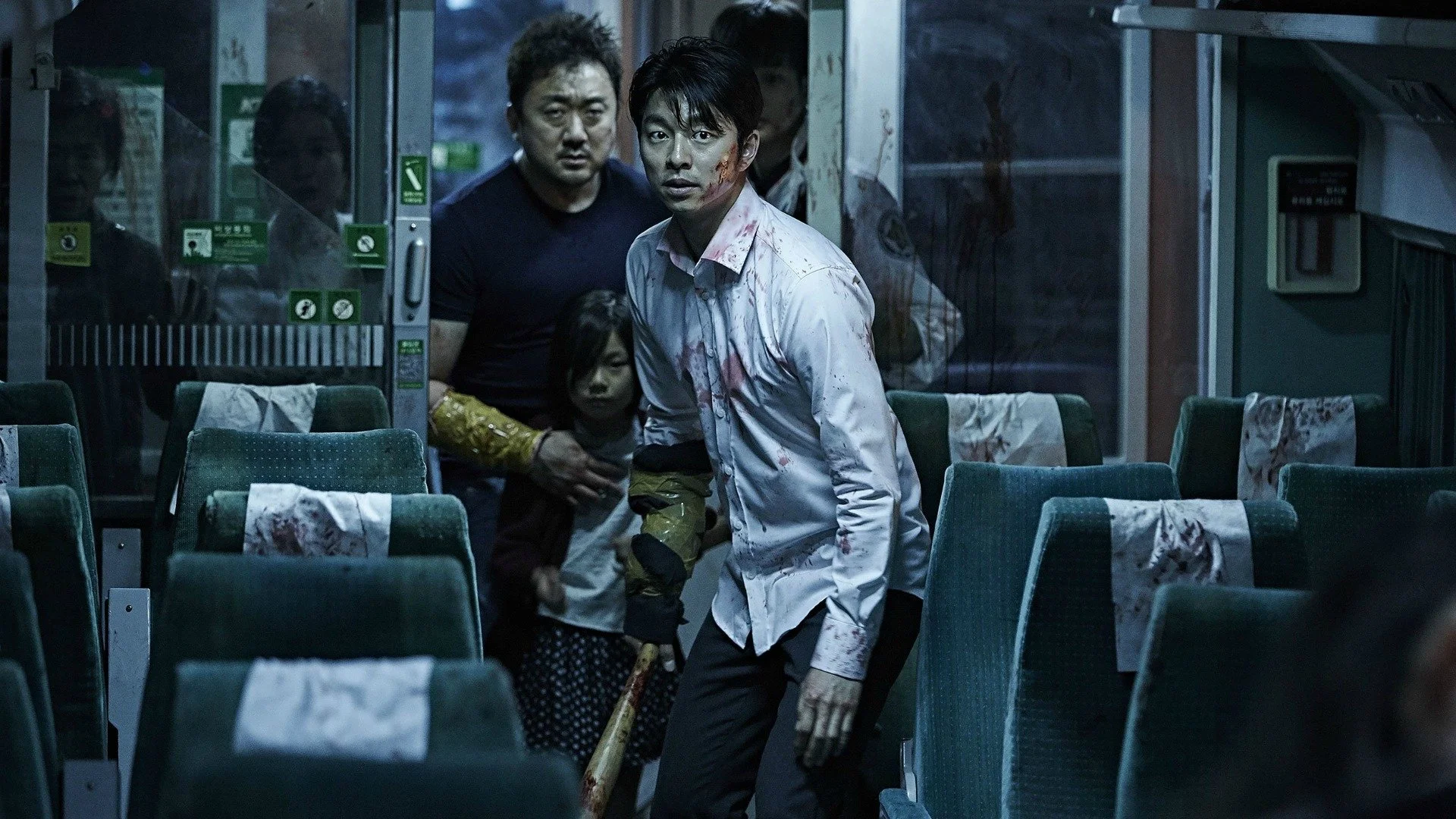
Left to Right: Don Lee as Sang-hwa, Kim Su-an as Su-an & Gong-yoo as Seok-woo
Along with the expanded train car sets, Sang-ho also kept the camera facing one specific side each based on where the train was meant to be heading. He explained that with the audience largely unaware of where the head of the train was, he opted for a silent way to keep us informed without causing disruption or exposition.
As we watch more passengers fall victim to exposure and infection, we’re soon faced with an inevitable countdown to the end as our favorites meet their end. In a reversal of an earlier scene where Seok-woo shuts a door on Sang-hwa and his wife, Sang-hwa makes a sacrifice on staying behind in an overloaded train car to hold a door shut for the rest of survivors in a truce that comes too late in a rivalry. Seok-woo lashes out in anger at Yon-suk, a high ranking and selfing executive, who had attempted to lock them both out. Throughout the film, we witnessed the subtle class warfare amongst all three of the men, giving us more of their heart and nature as we progressed. Despite beginning the ride with as much self-preserving traits as Yon-suk, Seok-woo is determined to be better for the sake of those who need his help.
Each death that comes with the looming end of the film hurts more than the last; sisters losing sisters, friends losing friends and lovers losing lovers. The literal crash ending comes with our mere handful of survivors transitioning from the train we’ve grown to know to a different track entirely. It emits only stress and tears; then heartbreak as Seok-woo fights and loses to a now-infected Yon-suk. Selfish in life and while undead, Yon-suk spends his final moments of humanity sacrificing others to find safety and purposely attacks Seok-woo knowing he’s infected.
Our final comfort comes in a small act; Seok-woo placing his daughter and the heavily pregnant Seong-kyeong in the safety of the enclosed conductor’s car as his vision fades while the infection tears at him. We only see his shadow as he throws himself from the train, but the act is popular among fans for being the determining factor in calling Train to Busan a beauty in the midst of its terror.
We bear through the remainder of Su-an’s tears for her father, in an incredible performance, as she and Seong-kyeong find safety at the end of the tracks. You can only weep with the young girl as she stumbles along with the knowledge that her father’s hours-long change from absentee to protector was one with genuine heart behind it.