A Haunting Revue II is three anthology style plays in one
Anthology style television programming has captivated audiences across the world since the early 1920s, when television producers identified interest in adapting short, self-contained teleplays for mass distribution via the airwaves. While early shows like Westinghouse Studio One and Kraft Television Theatre were often dramas rooted in reality, the popularity of shows like The Twilight Zone, The Outer Limits, and Night Gallery expanded this format to science fiction, horror, and weird fiction.
At this year’s Hollywood Fringe Fest, J-P Theatre Productions has produced the second year of their own anthology style stage show A Haunting Revue.
Featuring three different self-contained stage plays, A Haunting Revue II features an ensemble cast of local talent performing tense speculative drama plays inspired by the anthology shows of yesteryear.
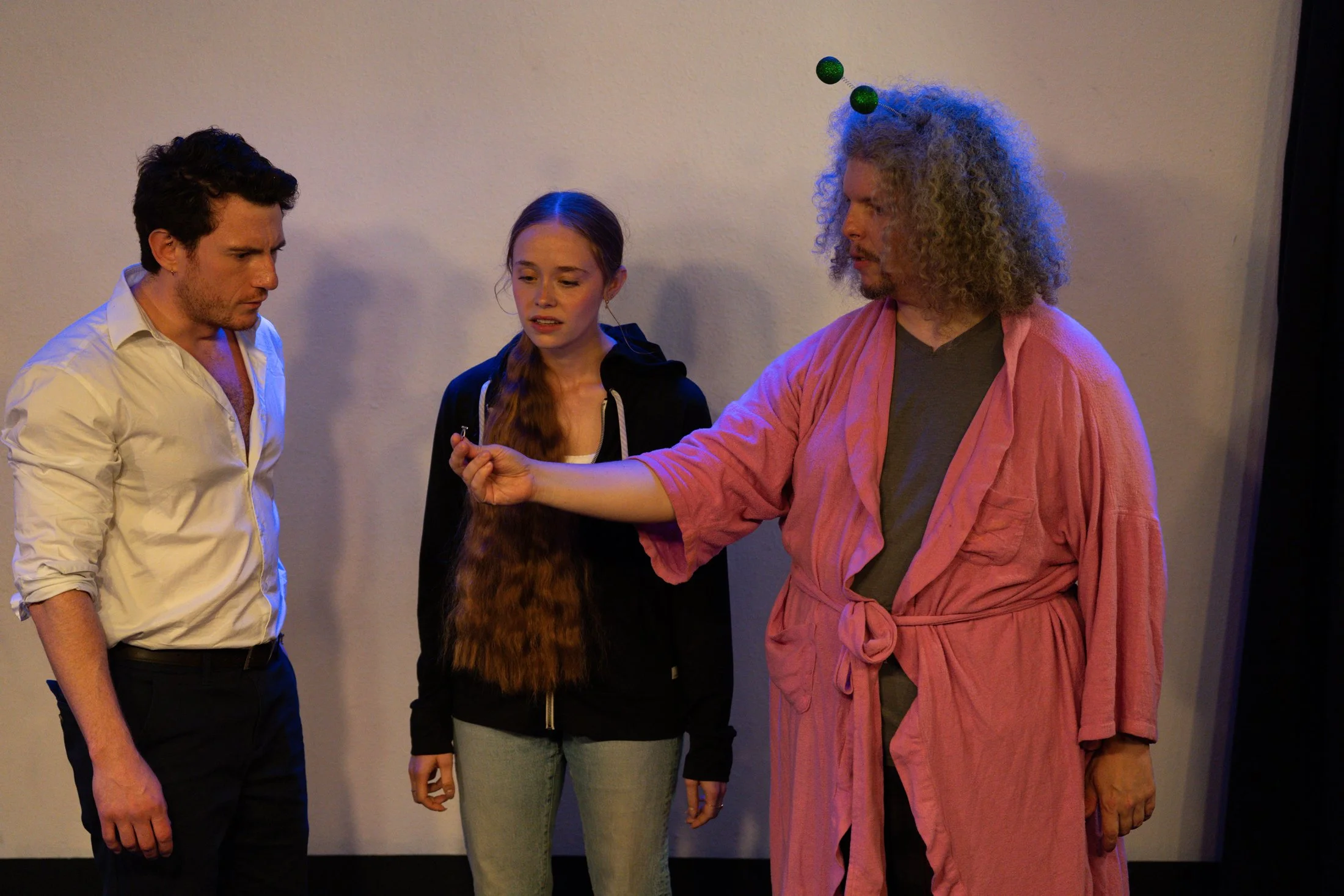
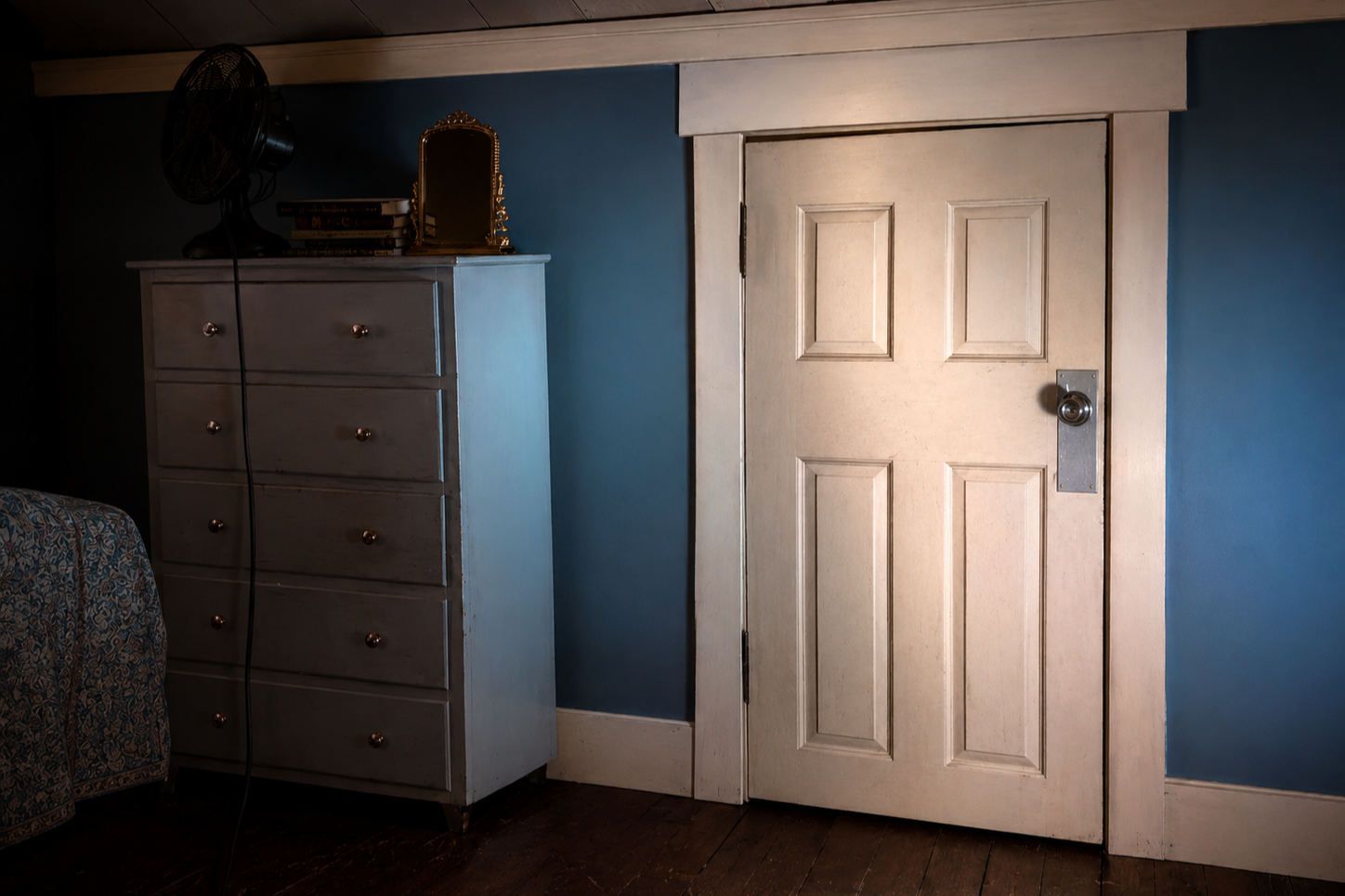
As a collection, the three plays lean less into the more fantastical elements of modern horror, instead leaning into drama-centered stories featuring speculative elements. At the heart of each story, we have a strong emotional core, be it siblings dealing with their mother’s will alongside their extraterrestrial and spoiled adopted brother, or an unexpected reunion between mentor and mentee. It was particularly impressive how effective these three stories were at delivering drama with a bit of tongue in cheek concept mashing. Back for its second year, it was clear that a lot of thought went into how to produce these plays in a blackbox theater with minimal effects, with set design that successfully shifts the ambiance and reframes each subsequent story.
While the stories provide each actor a good amount to play character-wise, the audience seemed at times to struggle with the serious subject matter juxtaposed against somewhat comedic delivery, slightly dampening the immersion of the show.
The first story “Birds of a Feather” mashes up sibling dysfunction with the absurdity of an adopted extraterrestrial outearning the motherly affection that a set of the woman’s biological children desperately crave. Set in the days following their mother’s death, the two human siblings find themselves scrounging for a few valuable heirlooms to pawn, as their alien adopted brother finds himself the owner of a large segment of their mother’s will. As the trio argue about their mother’s preference for the extraterrestrial and how it lead to their father’s “abduction,” they find themselves digging through mementos of the past, learning more about their parent’s unhappy marriage and eventually coming to learn that their father wasn’t abducted, but rather stepped out on the family. This revelation results in a well-earned discovery amongst the characters that perhaps their childhood fingerpointing doesn’t exactly hold up in the full context of adulthood.
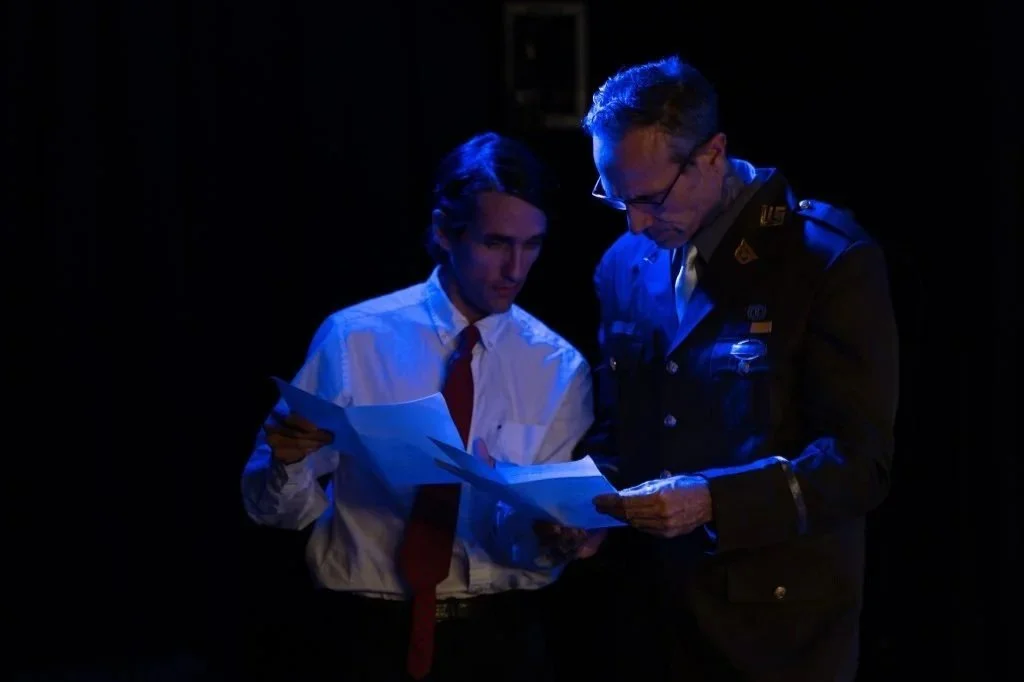
The second play “The Lateness of the Hours” had my favorite premise, as a successful man celebrating Christmas Eve with his fiancée finds himself called to a diner to meet his once-crucial Big Brother. Rather than fall into that familiar big brother-little brother dynamic, the pair represent a sad reality with the big brother’s mentoring setting up the other for success, only to fall into adulthood mediocrity, loneliness, and mental health woes. This play explored the ways in which our mentors can be stripped down to their humanity, with the younger man setting a firm boundary regarding his “big brother’s” neediness in adulthood as he enters a new stage of life. The writing felt strong and the cast really drew me in to the point that I forgot the play was meant to be speculative or creepy. In your sort-of classic Night Gallery reveal, it isn’t until the final moments of the play that we learn the younger man has been meeting with a big brother who died hours earlier in the diner, yet somehow drew the pair back together over one haunted chicken pot pie to tie up loose ends.
The final play “The Fight or Flight Response” exists with a strong archetypal framework, as a nepo baby finds himself continually tormented by his cruel and greedy boss years after his father secured his future at the company. As the play progresses, we learn that the company specializes in aviation and navigation, however our nepo baby employee finds himself being critical in piloting test flights for the company. But after a beloved coworker is killed during a crash whose severity is quickly dismissed by the bossman, the employee turned pilot finds himself seeking the revenge his boss so dearly deserves. While I was a tad confused with the non-linear nature of this one, I did really appreciate its use of sound effects and lighting effects, which I felt like could’ve added to the impact of the prior two plays.
A Haunting Revue II delivers on its concept, creating an evening of tales and intrigue slightly corrupted by the influence of horror and science fiction. It is a fitting and effective homage to Rod Sterling and anthology television while never feeling redundant or unoriginal. While there were moments that felt slightly awkward in the exchange of dialogue between actors, it could be partially attributed to the size of the space and close proximity of the audience. I wish at times that the production and sound design was a tad more elaborate and immersive, but it's very clear that A Haunting Revue could continue to grow and be refined with each subsequent show.
I’d definitely be curious to see what this team would put together with a larger theatre space and a bit more tech, but overall, I had a ton of fun with this show.