Scream 7: Is it time to let Ghostface die?
Hello out there to those that are out there. I’m Rob and I’m here today to give you my overly nostalgic and completely stressed out and in need of coffee “dad feelings” on Scream 7.
After decades of reinvention, meta commentary, legacy returns, and the franchise’s ongoing identity crisis between honoring its past and chasing its future, Scream finds itself once again asking a very simple question: what does Ghostface mean now?
This newest installment attempts to balance survival trauma, media obsession, and the exhausting reality of being a “final person” in a world that refuses to let horror stories end. The film follows a familiar group of survivors trying — and failing — to move on from their shared history, only to find themselves pulled back into a fresh cycle of masks, motives, and knives that feel both inevitable and strangely personal.
As with every review, I base my thoughts off of “The Five Factors Of Scare-O-logy.” I adhere to them because I created them, and they are as follows:
Cinematography (Up to 20 points)
Horror “Acting” (Up to 20 points)
Score / Soundtrack (Up to 20 points)
Story (Up to 20 points)
Scare Factor (Up to 20 points)
Those categories will each receive their respective points and at the end, the points for each category is calculated into one final number which then gives my letter grade and tier listing of the film.
Total Overall Points:
S – 81 to 100 points
A – 61 to 80 points
B – 41 to 60 points
C – 21 to 40 points
D – 0 to 20 points
Cinematography: 16 points
Scream 7 looks sleek in a way that feels intentional rather than trend-chasing. There’s a colder visual language this time around — wider negative space, harsher practical lighting, and more emphasis on reflective surfaces. Windows, phone screens, glass doors… everything feels like it’s watching you back.
There are several stalking sequences that rely less on frantic editing and more on uncomfortable stillness. The camera often holds just long enough to make you question whether Ghostface is already in the frame. Sometimes he is. Sometimes he isn’t. That uncertainty becomes the visual engine of the film.
It may not be the most iconic looking entry in the franchise, but it understands modern paranoia in a way that feels earned.
Horror Acting: 15 points
The performances carry a noticeable sense of fatigue — and that is a compliment. These characters feel worn down by the idea that their trauma has become serialized entertainment. You believe their hesitation. You believe their defensiveness. You believe that some of them are no longer sure survival is a victory.
There are standout moments where emotional confrontations land with surprising weight, especially when characters acknowledge the absurdity of their situation without turning it into outright comedy. That balance is very difficult for this franchise, and for the most part, it works.
However, a few newer additions feel slightly over-calibrated for modern horror audiences. The fear sometimes reads as performance rather than experience. It’s effective, just not always immersive.
Score / Soundtrack: 14 points
The film leans into minimalism more than expected. Instead of aggressively reminding you that danger is coming, the score often withdraws entirely, allowing ambient noise to carry tension: distant sirens, air vents, the subtle creak of architecture settling.
When musical cues do arrive, they feel sharp and surgical. Ghostface’s presence is often marked by sudden tonal intrusions rather than drawn-out suspense themes. It creates a rhythm that feels unpredictable, which is a smart evolution for a franchise built on audience expectations.
It may not deliver the most memorable motifs in the series, but it absolutely supports the film’s psychological pacing.
Story: 13 points
Scream 7 continues the franchise’s ongoing conversation about legacy, exploitation, and the uncomfortable reality that horror stories rarely stay buried. There is a clear thematic effort to explore what happens when survival becomes identity — and whether a person can ever truly escape a narrative the world refuses to stop retelling.
Some twists land with genuine emotional consequence. Others feel like they exist because a Scream movie requires them. The balance between organic motivation and franchise obligation is noticeable.
Longtime fans will appreciate the connective tissue and self-awareness. Casual viewers may feel like they are stepping into a story already mid-sentence. It never loses its core idea, but it occasionally struggles to breathe under the weight of its own mythology.
Scare Factor: 11 points
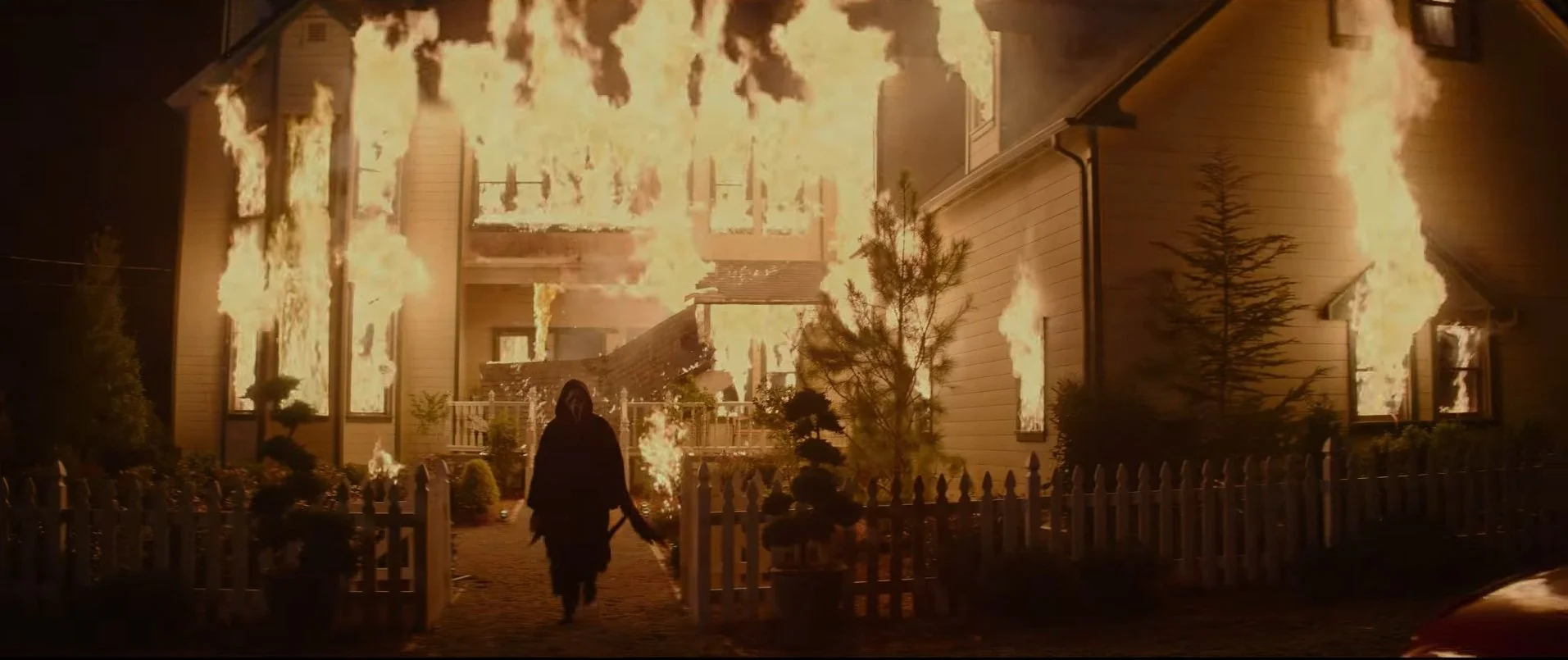
This entry prioritizes tension over spectacle. The kills are efficient rather than extravagant. The fear comes less from what Ghostface does and more from when he chooses to appear.
There are several sequences that build genuine unease through timing alone. Phone calls feel invasive again. Silence feels weaponized again. The mask itself feels less theatrical and more predatory.
It will not overwhelm seasoned horror fans looking for relentless intensity. But it absolutely restores a sense that danger can arrive without warning — and leave just as quickly.
Total Points: 69
Grade: A
Final Thoughts:
Scream 7 feels like a film that understands the exhaustion of its own existence — and chooses to lean into that truth rather than run from it. It recognizes that the franchise is no longer just about mystery or survival; it’s about endurance.
It doesn’t reinvent the formula. It doesn’t completely escape the expectations placed upon it. But it does manage to carve out a quieter, more reflective space within a series known for its noise.
This is a Scream movie that feels like it’s asking both its characters and its audience whether they are ready to finally let the story end… even while proving that maybe no one ever really is.
If you’re invested in the emotional aftermath of horror, in legacy characters confronting the weight of their own myth, or simply want to see Ghostface operate with a colder kind of precision, this one is worth your time.
And remember to keep it classy with a dash of slashy.