‘Scream’ is a classic film with lasting impact
Hello out there to those that are out there. I’m Rob, you are reading, and I thank you.
I’m here today to give you my slasher-reviving, expectation-shattering, Ghostface-calling, late-night cable rewind reflections of Scream (1996).
There are certain movies you remember watching for the first time, and then there are movies that feel like they were always part of the conversation even before you actually sat down with them.
Scream has always felt like that kind of movie. Like something you heard about, had pieces spoiled for you, caught halfway through on TV, and somehow none of that ever took away from finally experiencing it all the way through.
If anything, it almost made it better. Because by the time you really sit with Scream, you already know it matters; you just don’t fully understand why yet.
As with every review, I use my patent pending “Five Factors Of Scare-O-logy!” I adhere to them because I created them. Each category is worth up to 20 points, for a total possible score of 100 points.
Cinematography: 18 points
There’s a quiet confidence in how Scream is shot that doesn’t jump out at you right away. It doesn’t feel like it’s trying to impress you. It just… exists. Over time, that starts to feel like one of its biggest strengths.
Everything looks familiar. The houses, the streets, the interiors—they don’t feel stylized to the point of distraction. They feel like places you’ve either been or places you could easily imagine yourself in, and that normalcy does a lot of the heavy lifting.
Because when things start to go wrong, they don’t feel distant; they feel close.
Looking back on it now, you can see how intentional that restraint really is. The camera stays controlled. The lighting never overreaches. It trusts the moment instead of trying to create it artificially.
It’s not flashy, but it’s the kind of visual style that sticks with you without needing to announce itself.
Horror Acting: 20 points
The acting in Scream is one of those things that doesn’t just hold up—it reveals more about itself the more time you spend with it.
Neve Campbell gives Sidney a grounded, almost quiet strength that feels real in a way that anchors everything else around her. She doesn’t overplay the fear, she doesn’t lean into anything that feels forced—she just reacts. And because of that, you believe her every step of the way.
But what really grows on you over time is the contrast in energy across the cast.
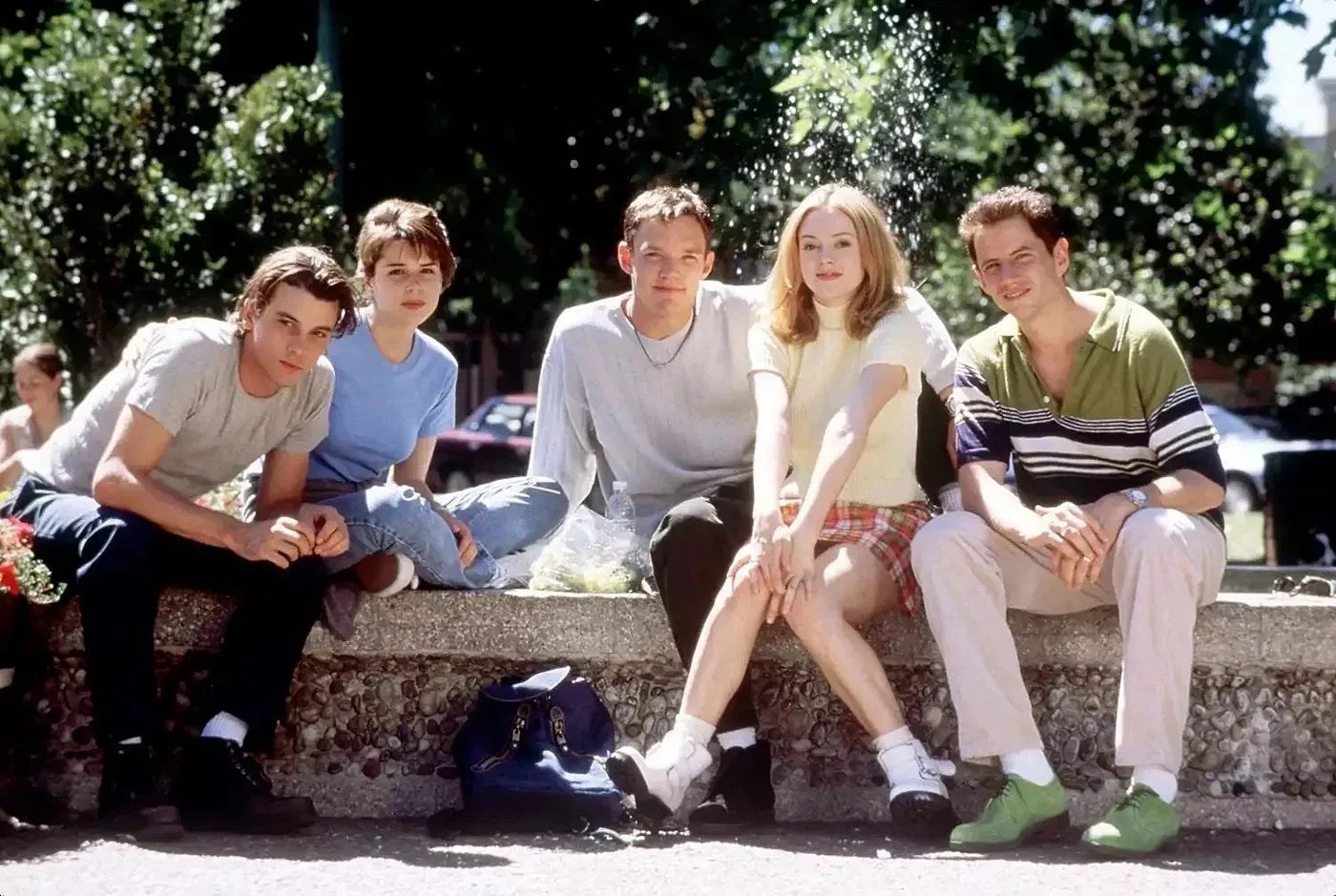
Matthew Lillard brings something that feels unpredictable in the best way. There’s a chaos to his performance that gets more noticeable with every rewatch—not because it’s over the top, but because it’s so committed to what it is.
And then there’s the chemistry. The group dynamic feels lived in. Conversations don’t feel staged—they feel like they were already happening before the camera showed up.
Looking back, these performances didn’t just work in the moment, they helped define how people remember Scream.
Score/Soundtrack: 19 points
The sound of Scream is something that feels more important the longer you sit with it.
The score itself is subtle. It does its job without ever needing to take center stage—building tension, guiding scenes, and letting everything breathe when it needs to. It’s controlled in the same way the cinematography is controlled.
But the soundtrack… that’s where the personality really lives.
There’s a very specific late-90s identity running through the music choices, and it doesn’t just sit in the background—it places you in that time. It reminds you what horror felt like in that era, what movies sounded like, what the culture around them was.
It’s the kind of soundtrack that becomes tied to the experience itself. Not just something you hear, but something you remember.
When you think back on Scream, you don’t just picture scenes - you feel the tone those songs helped create.
Story: 20 points
What Scream does with its story feels so natural now that it’s easy to forget how different it once was.
The self-awareness. The rules. The way it plays with expectations without ever losing control of the narrative—it all feels seamless; like it always existed that way.
But looking back, you can see how sharp it really is: it knows exactly what it’s doing, and it never overcomplicates it. It walks that line between being clever and being accessible without ever tipping too far in either direction.
And even when you already know how everything unfolds, there’s still something satisfying about going back through it; watching how it sets things up, how it pays things off.
It’s one of those stories that doesn’t lose value with familiarity—it gains it.
Scare Factor: 17 points
Time changes how Scream hits, but it doesn’t take away what makes it effective.
The first time, it’s the tension, the uncertainty, and the feeling that anything could happen. But over time, it becomes something a little quieter… and maybe a little more lasting.
There’s something about how grounded it is that keeps it working. It doesn’t rely on spectacle. It doesn’t create distance between you and what’s happening.
It feels possible. That kind of fear doesn’t really fade—it just settles in differently. It might not hit the same way it once did, but it still hits in a way that matters.
Total: 94 points
Grade: S Tier
Final Thoughts:
Scream doesn’t feel like a movie that came and went. It feels like something that reshaped the space it existed in and then stayed there.
It brought slashers back into focus. It reminded people why the genre worked. And at the same time, it gave audiences something new to latch onto without losing what made horror fun in the first place.
But beyond all of that, it’s just one of those movies that sticks with you.
The kind you revisit without planning to. The kind that feels just as easy to watch now as it did the first time. The kind that never really leaves your rotation, even if you don’t realize it. And maybe that’s the best way to describe it.
Not just something you watched, but something you kept. At the end of the day, horror hits everyone a little differently, especially when nostalgia gets involved.
I’ve been Rob, and this has been A Horrorstalgia Of… Scream (1996).