The Japanese Horror Games you’ve never heard of
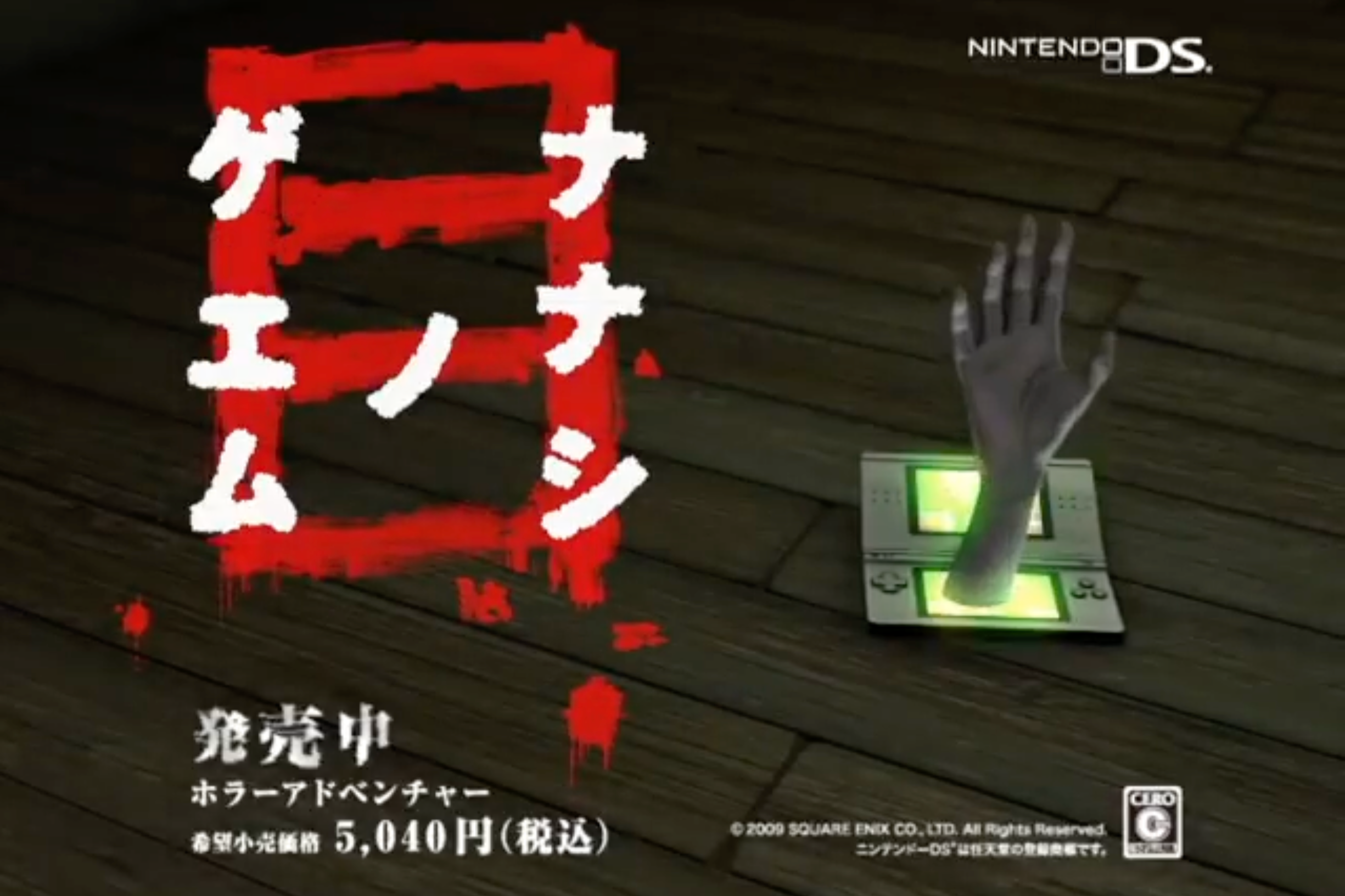
I discovered it during my sophomore year in college: a video essay by the YouTuber BeamBuddy had popped up on my recommended feed, simply titled “The Nameless Game.” Curious, I started watching it. Within the first few minutes, he described a horror game made for the Nintendo DS that was only released in Japan. The game is called Nanashi no Game, or The Nameless Game, and it centers around a cursed game that’s been making the rounds on people’s handheld “TS” systems (The Nameless Game’s version of DS). The rumor goes that if you play the game, you’ll die in seven days.
At first, I wasn’t sure if the game was real or not. It sounded exactly like one of the Creepypasta stories that I loved growing up. But after those first few minutes (and a quick google search), I realized that it was indeed real. Even better, I found out that there’s a fanmade English translation for it. So, I set the video-essay aside and headed online to learn how I could play the game for myself. It didn’t take long before I came across an etsy seller with cheap listings for English cartridges of the games (yes, plural; more on that later). As soon as I had the money, I snatched them up. Fast forward upwards of a year to a few weeks ago; that’s when I was finally able to slot the cartridge into my pink DS, turn it on, and hit play.
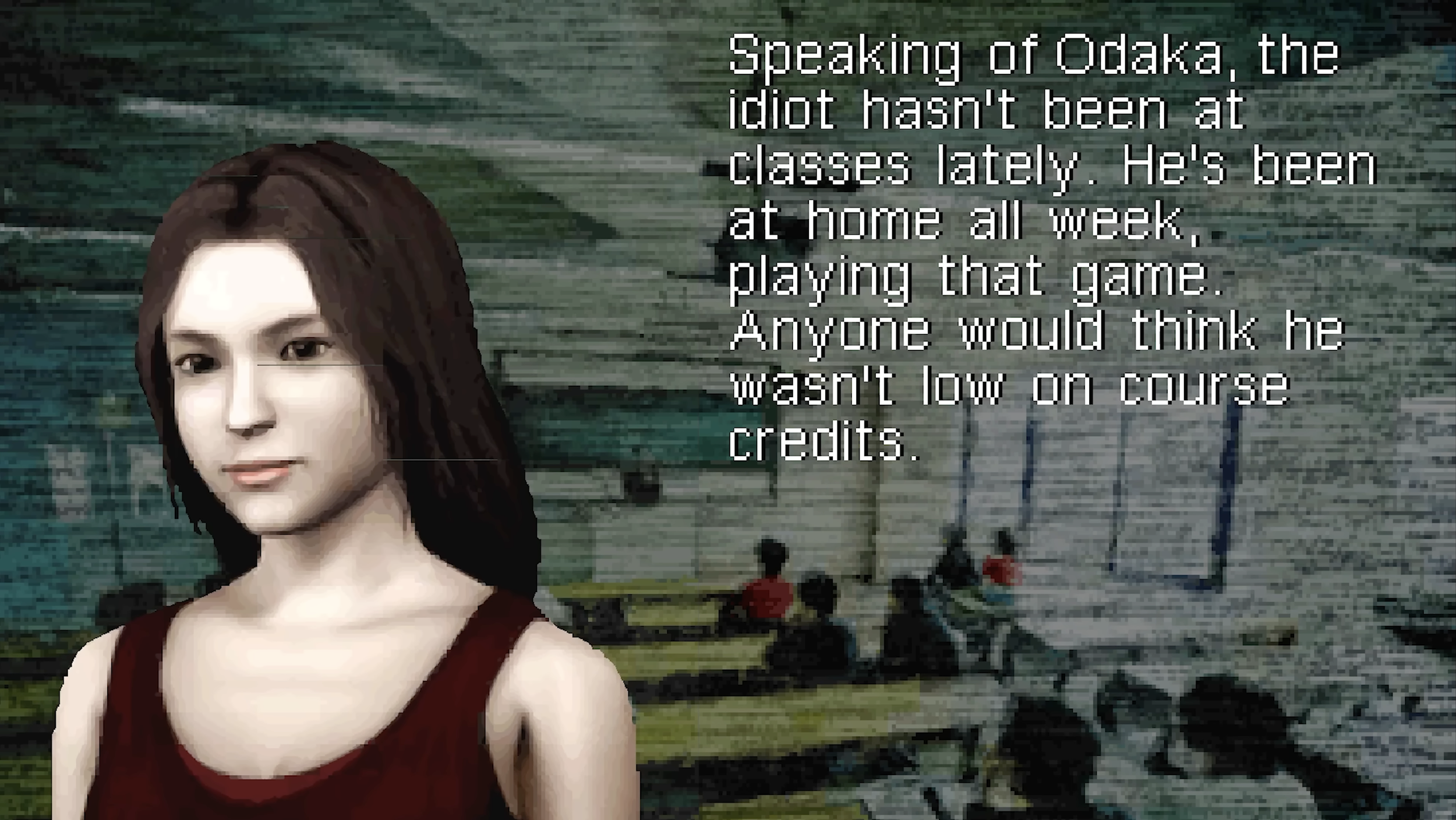
Released on July 3, 2008, Nanashi no Game (The Nameless Game) was developed by Epics and published by Square Enix for the Nintendo DS. In it, you play as a student at Nanto University in Tokyo. During one of your classes, your friend Odaka sends a mysterious game to your TS. Your playtime is interrupted when his girlfriend, Riko, asks you to check on him. He’s been absent for several days, apparently growing obsessed with a cursed game - the same one that he just sent you. But it’s just a myth, right? Only, upon going to his apartment, you discover his waterlogged corpse, still clutching his TS. Now it’s up to you to solve the mystery behind this game and stop the curse, lest your voice be added to its chorus of stolen souls.
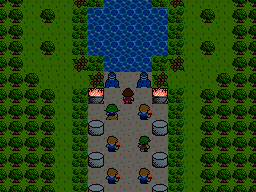
The Nameless Game is split into two sections. One of them is, of course, the cursed game. It’s a simple 2D 8-bit RPG that, aside from some glitchy visuals, doesn’t seem all that out of the ordinary at first. However, strange things start to happen the longer you play. It doesn’t take long before it drops the facade of the real game it once was, communicating directly with the player and recreating the locations your character explores in the real world. The Nameless Game’s unique choice to have the cursed game facilitate character dialogue and convey story details by making you actually play through them is really clever. That isn’t to say that the game is completely devoid of long expository text, but we’ll get to that.
The horror in the cursed game side of The Nameless Game is handled really well. Horror games that focus on haunted video games face the unique challenge of needing to balance being scary and being subtle. If they try too hard to be scary, they run the risk of being too silly to take seriously (take Sonic.exe [2012] for example). The Nameless Game accomplishes this balance. The horror is creepy, yet it’s not so out of place that it takes me out of the experience. It’s even downright unsettling at times because of how well it blends in.
The player can also hop into their TS menu, used to play the cursed game anytime there’s an update, as well as to check for important emails from other characters. The emails are a neat way to update the player’s objective without breaking the immersion. Also, this menu perfectly mimics that of the DS, which is a nice touch.
The other half of The Nameless Game is set in the real world. During these sections, the player explores different locations each day in search of clues pointing towards the curse’s origin. But you’re not alone; the game has sent the ghosts of its victims, referred to as Regrets, to stop you. You’ll need to avoid them while you investigate if you wish to survive on your journey to the heart of this mystery.
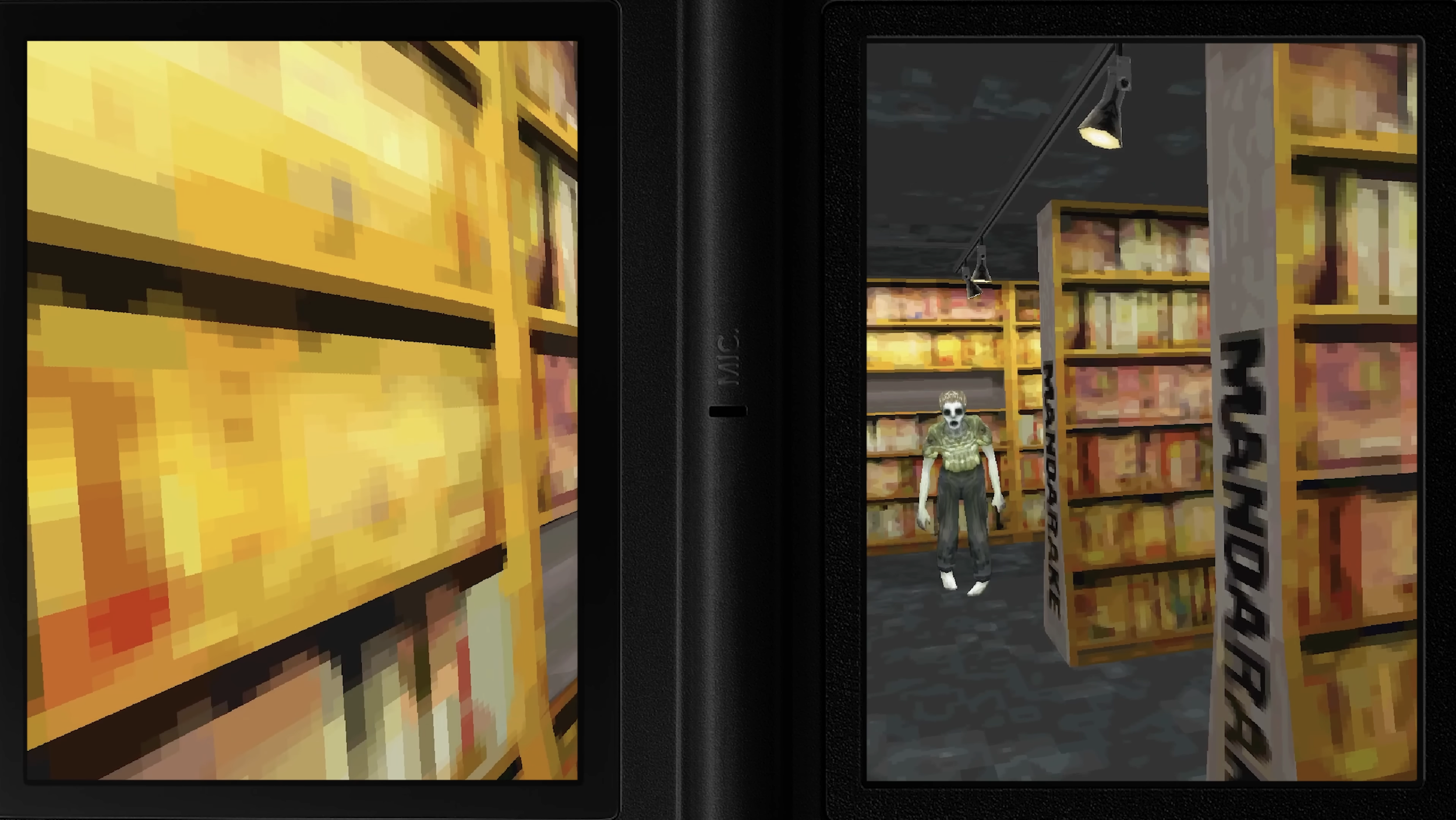
What’s most impressive about these sections is that they’re executed in fully detailed, completely free-roam 3D environments. This is accomplished by having the player rotate their DS onto its side, with both screens being used to show the level. The stylus is used on the touch screen to move around and investigate by touching the center to walk forward, touching the edges to turn or look around, and tapping on nearby objects to interact. The D-pad can perform the same movements, plus the ability to move backwards. Simultaneously performing the same movement with the stylus and D-pad doubles its speed.
These controls are, admittedly, a little clunky. I got the hang of them pretty quickly though, and from then on I wasn’t too bothered by the jankiness of it. Besides, it honestly blew me away that the game even has complete 3D free-roam in the first place, not to mention how good it looks. The fact that they were able to achieve this and still have decent controls at all is really cool.
The sound during these sections is 3D as well. This does a great deal to make the atmosphere of The Nameless Game effectively scary. It isn’t always; generally, I would describe the vibe of these games as creepy yet not overtly scary. Still, there are good scares here that genuinely caught me off-guard, even on replay. One particular section midway through involves the cursed game recreating a series of past events before abruptly switching you to first-person free-roam at a choice moment within the flashback. When it did, I was instantly filled with dread.
The music is great too. Obviously there’s some spooky songs to put you on edge or pump you with adrenaline as you run away from a pursuing Regret. However, the centerpiece of the soundtrack is a chiptune theme that plays during the cursed game. Although this theme is re-used quite often throughout The Nameless Game, I didn’t get tired of it. It’s a good tune, and you hear a couple variations of it that each serve their own purpose—whether it be to spook you or to enhance the emotional weight of a scene.
That leaves us with the story of The Nameless Game. It’s simple, and it takes very obvious inspiration from the movie Ring (1998) and the Ju-on film series, but that adds to the game’s charm for me. Like I said at the top, The Nameless Game feels like I’m playing through a Creepypasta. As someone who has a soft-spot for those stories, this makes the game feel all the more cozy to me. That’s why I’m more forgiving towards some of its goofy writing. I’m already used to Creepypastas being over the top, and personally I think the story justifies it.
Perhaps my warmth towards the game is also why I didn’t have a problem with the character of Ooyama. He’s a professor who helps the player throughout their journey. Oftentimes, he appears to dump exposition mixed with dense—often unnecessary—science-y talk that tries to describe the supernatural phenomena going on. I understand how he would be annoying to some, and I’d be lying if I said I didn’t turn my brain off sometimes when talking to him. Because I’ve grown to love these games though, I’ve come to view him as one of their likable characters.
Something I didn’t expect going into The Nameless Game was for me to get so emotionally invested in its story. As you uncover more secrets behind the cursed game and reach the conclusion of the story, it takes a surprisingly heartfelt turn. I’ve heard people call the ending too sappy, and I can see why. However, since I’m a sucker for that sort of stuff, it worked for me.
I wish I could say the same for the gameplay during this part. I didn’t mind it on my first playthrough, due to how invested I was in the story. Yet even then, I noticed that it wasn’t very intuitive. I couldn’t figure out what I was supposed to do until my third try, and only because I had no other options. That rarely happens to me. During my replay is when I realized that the gameplay during the final day isn’t very engaging either. While I hesitate to call it bad, as it makes sense for the story, I don’t think I’d call it good.
Minor issues aside, I love The Nameless Game. It’s a real shame that American focus groups stopped it from being brought overseas, I think that kid-me would have loved it too.
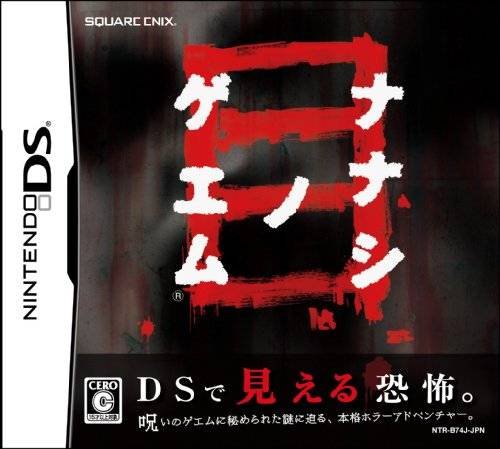
But as I have already alluded to, our story doesn’t end there. A sequel was made following the success of the first game, once again developed by Epics and published by Square Enix. They released Nanashi no Game: Me, or The Nameless Game: Eye, for the Nintendo DS on Aug. 27, 2009.
Set one year after the events of the first game, The Nameless Game: Eye puts you in the shoes of another student at Nanto University. Your friend Yuuto hasn’t shown up to class since the time he told you about some cursed game he’d been playing. Ren, your girlfriend, tells you to stop by his dorm and see if he’s ok. When you get there, everything seems fine. That is, until you find Yuuto’s body curled up with his TS, right before it sends you a copy of the cursed game. With the curse now passed onto you, you’ll need to race against time to find its source with the help of Ren and Professor Kawagoe. Will you be able to stop the curse once and for all, or will you die trying?
Ok, I know what you’re thinking: “That sounds exactly like the first game!” However, while The Nameless Game: Eye shares the same premise, it has a very different story than that of the first game. Even when Eye reuses certain locations from the original, they aren’t the same as how you experienced them on your first visit. You can tell that the developers really wanted to up their game here, so to speak. It’s cool to see them take bigger and weirder swings, even though they don’t all land.
The gameplay in The Nameless Game: Eye takes the foundation laid by the previous game (albeit with slightly improved movement controls) and builds on it. For starters, the cursed game’s integration into the rest of the game has deepened to the point that multiple sections encourage the player to jump back into it whenever they please. This differs from the first game, which only allowed you to play the cursed game at specific moments. The cursed game itself has been given a wider variety of more complex levels, including new challenges, collectible cartridges, and optional cutscenes that add to the story.
I really like all of these additions. They make the cursed game more interesting to play than it was before. That said, increasing the amount of times that the player switches back and forth between the cursed game and real world gameplay does slightly drag down the pacing. It doesn’t help that you’re still playing the real world sections with the DS on its side and the cursed game sections with the DS right side up.
As for the real world portion of the game, there are two major changes. The first is that the player can choose a handful of the locations they explore. The day will give you two options to choose from, with each location being completely distinct from the other choice. Even the Regrets that you face and cursed game levels you play are unique to each location. The developers were clearly doing what they could to give this game better replayability, especially given that the second location options (the ones you’re more likely to choose on your second playthrough) are a bit more intense than the first ones. It’s an ambitious idea, and for the most part they succeeded. However, I think they bit off more than they could chew. One of these days uses the same map for both location options, with several moments being copied and pasted. At least the developers still slightly differentiated the two choices so that they aren’t one to one with each other.
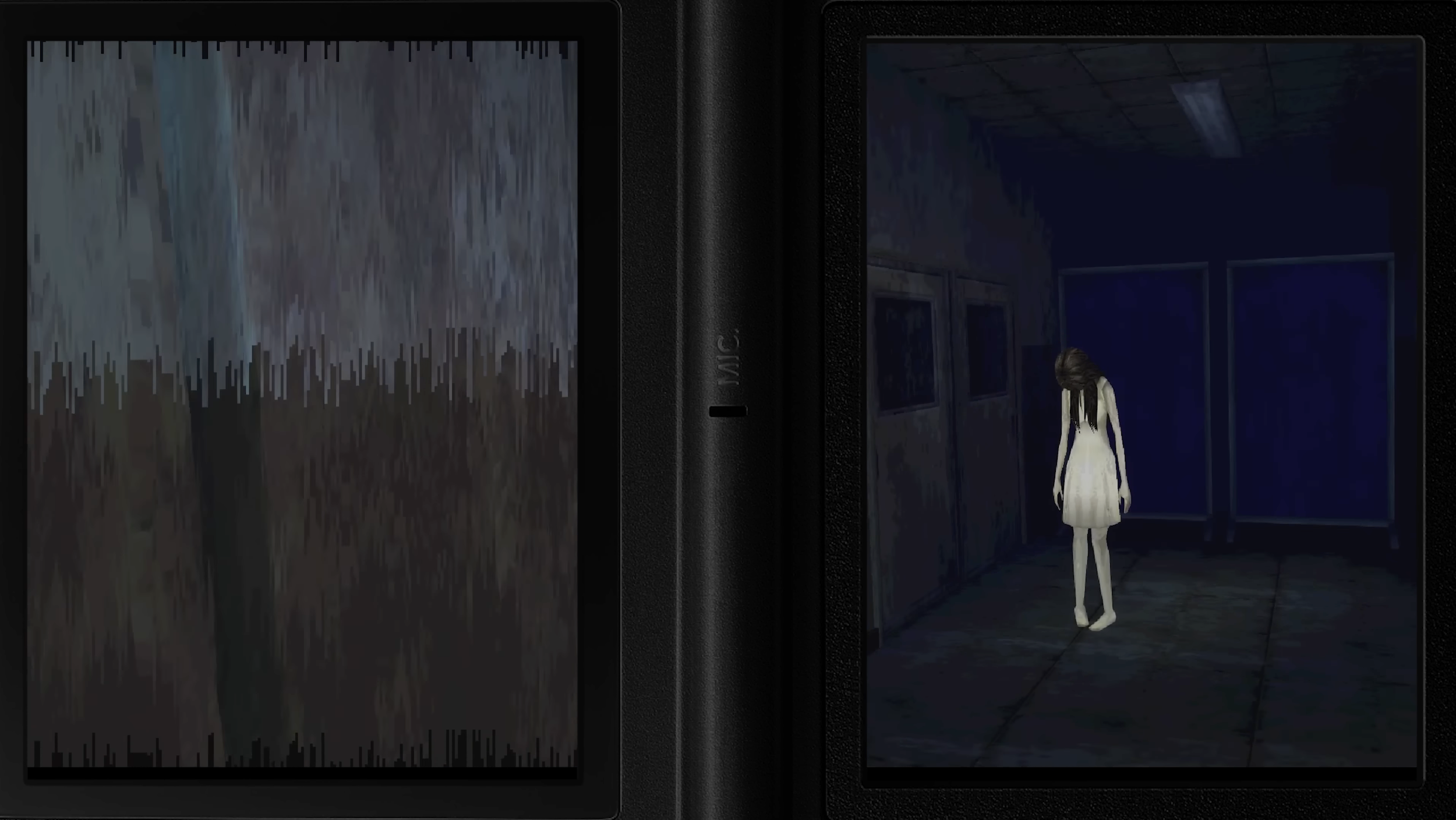
The other major change is this game’s gimmick: your eye has a sixth sense. Your left eye—or, the left screen during the real world gameplay—becomes fuzzy whenever a Regret is nearby, functioning as a warning system. This wouldn’t have mattered in the first game, where Regrets are easily visible at any distance. To compensate, the Regrets in Eye are only visible upon close proximity. This makes encounters more nerve-racking, as you’re never sure how close you are to getting caught until a Regret suddenly appears right next to you. The game isn’t too unforgiving though. Most of the time, when a Regret comes too close to you, it’s not hard to get away.
On top of this, your left eye can see markings that your right eye can’t. Interacting with white markings updates the cursed game with a new level to progress the story. Red markings are similar, except they don’t give you another RPG level. Instead, you have to beat a side-scrolling platformer level in order to unlock the path forward in the real world. These, as well as bonus platformer levels that you acquire via the collectible cartridges, can be replayed from The Nameless Game: Eye’s menu screen.
My issue with these hidden markings isn’t with the mechanic itself. I actually think it’s a pretty neat idea. It’s that the game relies on them constantly. I know I called the left eye this game’s “gimmick,” but this is the only area where it really feels like one. While it doesn’t ruin the game by any means, it does contribute to the pacing issue.
Eye’s presentation is a bit of a mixed bag. As part of their endeavor to outdo the first game, the developers did their best to make Eye scarier than its predecessor. For the real world sections, I’d say they did pretty well. There are more scares throughout each level, they make greater use of the 3D sound system, and there are some really memorable set pieces. The only aspect that feels like a step down is the character models during dialogue scenes. Although they’re technically “better” than the first game’s models, this unintentionally gives an uncanny valley look to them.
The cursed game sections are a different story. Remember how earlier I stated that when horror games about haunted video games try too hard, they end up being more goofy than scary? That is sadly the case with The Nameless Game: Eye.
Within the beginning of the game, you have character sprites being bloodily murdered as the sprite responsible says they're gonna “kill ‘em all.” Now, to its credit, the majority of Eye’s RPG levels usually aren’t this over the top, and I still found myself enjoying them. However, the worst offender is the blood-soaked platformer levels, where players need to dodge blood-covered blades so as to avoid bloody decapitations. Did I mention there’s a lot of blood? The story somewhat justifies it, but it still comes off as needlessly edgy.
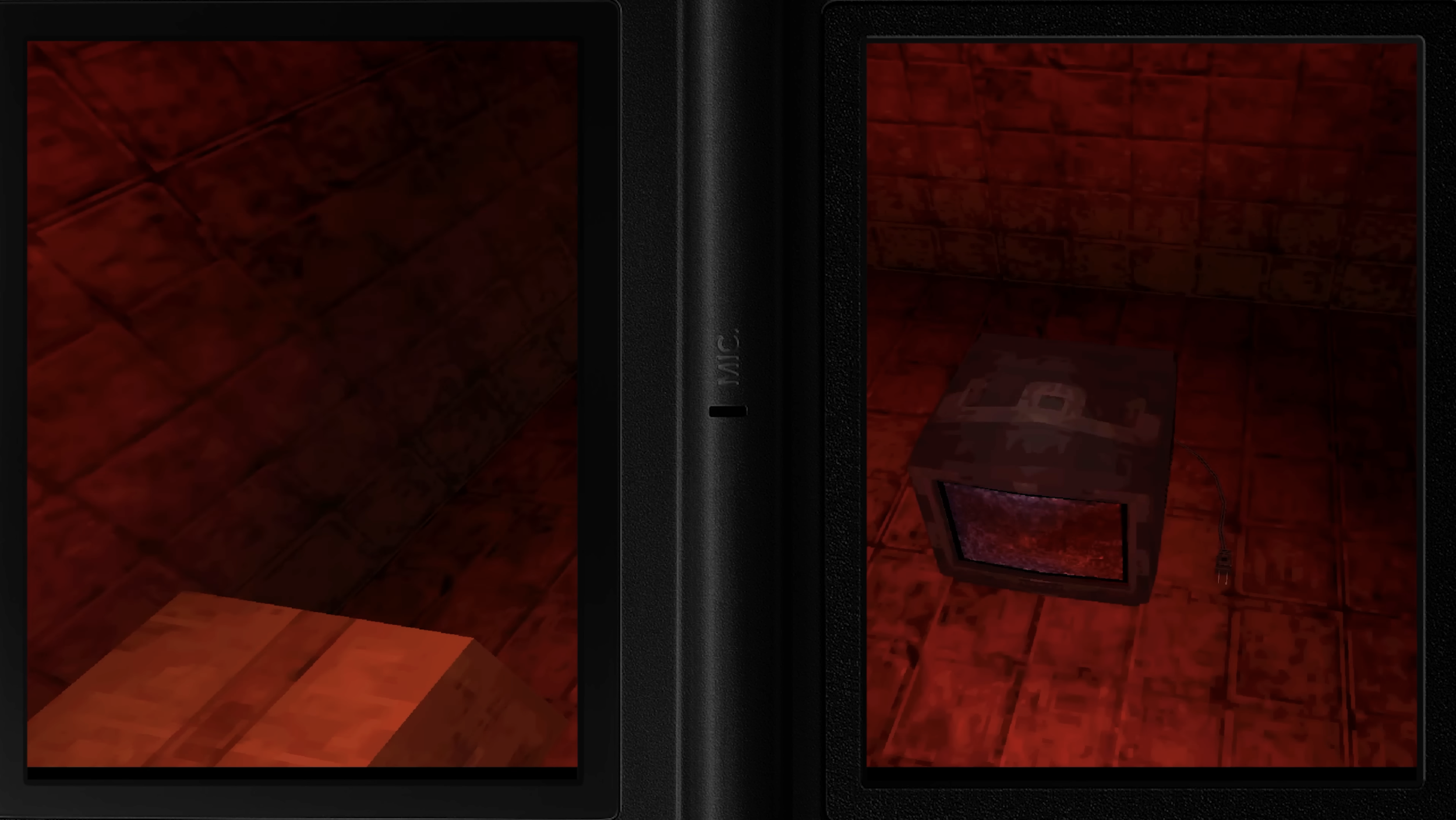
The music is another mixed bag. In the real world sections, the score is effective at generating paranoia. The cursed game leaves much to be desired though. While the theme from the first game returns, you hardly get to enjoy it. Most of your time in the cursed game is spent listening to a discordant, un-melodical track of blips and bloops. I would have gotten sick of it if the cursed game hadn’t been interesting enough for me to be able to tune it out.
As for the story, I like it a lot. It has the same strengths as the first game, complete with a good heart and a charming—albeit flawed—cast of characters. Something that surprised me here was how much the villain of The Nameless Game: Eye resonated with me as someone with BPD (Borderline Personality Disorder). Not necessarily because I think they have it, but because the way that they’re written hits really close to home. I also love that the story isn’t afraid to get weird, though other people’s mileage seems to vary.
Unfortunately, the story is held back by a convoluted structure. The plot feels disjointed at times, especially at the beginning. The game jumps around a lot between different points in time during the first day, giving the narrative a confusing start. Then there are the different location options. They’re cool in concept, and great for replayability. However, they ultimately don’t add much to the story. You learn essentially the same information no matter what option you choose. There’s also some plot-holes and inconsistencies, both within this game and in conjunction with the first.
But hey, at least The Nameless Game: Eye has a better climax! Remember those set pieces I mentioned earlier? The best ones are at the tail end of the game. The devs pulled out all the stops here, finishing strong with an awesome final boss of sorts. This is where the effort they put in to make a better game shines the brightest. It makes me upset that we never got the third game set up by the true ending; I would have loved to see where they took the series next.
There are more games in this series in the form of spin-off titles, though they seem to be lost media. Noroi no Game: Chi and Noroi no Game: Goku are both DSiWare titles released on Sept. 9, 2009, serving as compilations of more platformer levels. Nanashi no App is a mobile game released on Jan. 26 for iOS and Feb. 13 for Android in 2012. It had a similar plot to the two mainline entries, however I couldn’t find much more information about it. Lastly there’s 774 Deaths, a collection of hardcore platformer levels akin to the DSiWare games, released later that year on April 2.
Hopefully one day these games will be ported to modern hardware so that more people can experience The Nameless Game saga, preferably overseas too. Until then, you can watch walkthroughs or play romhacks of the games. But if you want the best experience, I recommend finding English cartridges and playing them on a DS if you’re able to.
Oh, one more thing: here’s a little bonus that I found while writing this.