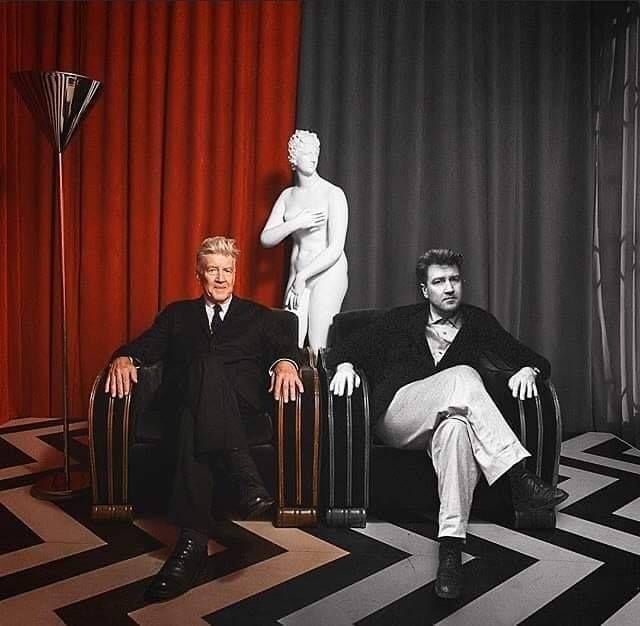
On a man both beautiful and strange. A look at David Lynch’s Impact
If you had told me seven years ago that I would be writing an article on the impact that David Lynch and his art has had on me, I would have nervously laughed because I would have thought you were out of your mind.
Art is very often not seen as it is, but as we are as the viewer; what you bring with you to a movie in your own heart and mind will impact what you see in the end, every time.
When I first heard of Lynch, I was a child, afraid of an image from ‘Eraserhead’ that made me fear watching his movies because I didn’t want to have more unpleasant dreams than I already did. When I was small, all I knew of him was a single work and image, and that someone I loved was enamored by his work. Then, with time and laziness, I got the impression that Lynch, his fans, and his films were all symptoms of a pretentious, elitist, gatekeeper-riddled world of “cinephiles” who looked down on the common person for not watching enough arthouse films.
Then came curiosity, when the better part of me told me that I was misinformed (and uninformed) greatly, and should watch his work with an open mind.
Seeing Lynch talk in interviews helped. There was something so familiar and grounded about him. There was no hint of ego or arrogance of any kind; just a man who loved to create art, who had a constant, insatiable urge to do so. I could relate to that.
With age and time, I learned that I had underestimated and devalued myself even more than I had casually done to any filmmaker I’d never met by resigning myself to a life where the only creative endeavors I would engage in would be photography and poetry, and I insisted on keeping both to myself. Unlike relatives of mine, I was not a savant. I was not immediately good at anything creative, and was trying to measure up to the high standards set by people who felt that there was not room for another artist in my family. That quota had been met before I was even born, so I would doodle in journals but nothing more often past a certain age.
Until one day, I realized that like Lynch, I had an insatiable, constant impulse to create art in many forms; written, photographed, painted, maybe even played on an instrument. Once I committed myself to the endeavor of becoming an artist, I was unable to get off of the train at any other stop, no matter how many doubts remained within me.
What truly turned the corner for me with Lynch was a succession of things, not just one.
It started with curiosity, then engagement with his work. Seeing him talk and finding him as charming as he was relatable and eccentric, re-engaging with his work after finding aesthetic value (and even a lot of frustration) in it at times. Watching ‘Mulholland Drive’ for the first time, and then seeing him describe his journey to ‘Eraserhead’; these all added up over time. His work became a challenge I wanted to take on.
At first I wanted to prove to myself and others that I did indeed not like his work, or that I could “figure out” the numerous mysteries within that work.
I had not realized that I had been conditioned to not like uncertainty in stories. I had grown to subconsciously demand resolution in movies, and found ones that lacked that intentionally annoying or pretentious. The overwhelmingly white, male, often wealth-privileged voices that dominate the mainstream when it comes to the world of both filmmaking and film watching (critics and non-critics alike) had tricked me into thinking there was no place for me at the table, and that maybe these movies were simply made for men, by men, or by smarter people than myself.
Part of why watching Lynch interviews endeared me to him and made me try again with his work was that he was not an unfamiliar guy to me. I had in fact known someone very much like him in some ways, but this person did not get to pursue the “art life” as Lynch did ultimately. In many ways, the way Lynch talked did a lot for me in terms of making me want to like his films instead of the opposite.
‘Eraserhead’ was a tough one for me because once I got past the lingering fear (I am indeed a wimp when it comes to horror to this day, though I watch it anyways now instead of avoiding it like the plague), but not the unfamiliar pacing, nor the dream-logic approach to filmmaking that I had not seen anywhere else before. It felt like watching a foreign film with no titles, in slow motion.
Nevertheless, there remained an impression on me. Specifically, I was impressed by its style; the beautiful black and white photography produced by the collaboration between Frederick Elmes and Lynch.
Over time, I came to learn that Lynch was not unlike the modernists in fine art – he made work for the viewer to interpret themselves; that had meaning for him but also had subjectivity baked into it as an enduring gift to those who took the time to watch them. Each person who watches his films may see something different. I used to find that frustrating, but I’ve come to deeply admire it as an artist and as a cinephile. There is something tremendously kind about an artist whose ego is not at the forefront, who refuses to limit the experiences of those who encounter their work. One of the greatest gifts I’ve been given over the years has been hearing the impressions that my work has left on my classmates, teachers, and friends. It’s not a need to impress people that struck me, it was that once I started having people point out how my paintings, drawings, ceramics, or other works made them feel and what they made them think about, I found worth in continuing what at times still can feel like a fool’s errand. Instead of finding the art life isolating, as I sometimes still do, Lynch found comfort and restoration in solitude. When he described his journey to making ‘Eraserhead’, he would always tell the story of when he was an art school student painting a landscape of a darkly colored/lit garden at night. From the painting he heard a wind, and said to himself, “Oh! A moving painting!” There is a childlike wonder about him that never went away - even into old age - that was effervescent.
He remarked in his book “Room to Dream” that his mother, once she saw his interest in art at a very young age, did not give him coloring books because she did not want to restrict his creativity. That moment, and the moment he began practicing transcendental meditation in the early 1970s, were critical for what would come later.
When you quiet the mind you may find relaxation, but if you’re lucky, you might also find yourself catching ideas. To quote Lynch: “Catching ideas is like catching fish.” You might not always catch a big one, or any at all, but persistence will produce results.
What he had more than anything else was a free, boundless mind, but also tremendous dedication and discipline. He saw art for what it is – a form of labor. He found joy in the work, but I’m sure like any other artist also had his frustrations and defeats.
Famously, making ‘Eraserhead’ was a tremendous ordeal for Lynch, and not just because it was his first feature-length film. It was also due to that nagging, incessant problem we all deal with – money.
It took over five years to make ‘Eraserhead’ because funding kept falling short. Lynch had to take up a “regular” job to make sure he was providing for his young family. His determination never diminished entirely, even if it waned here and there; it remained ultimately sincere and strong at the end of the day.
A lot of what makes Lynch’s work not resonate with some folks – including myself at one point – was not knowing when he was being sincere and when he was being intentionally campy or otherwise humorous. This was another big turning point for me – learning that ‘Twin Peaks’ was a soap opera AND a satire of soap operas, a crime-drama AND a scathing critique of crime-dramas and their desensitizing of the masses to violence (particularly violence against women and girls).
Not long before I began practicing the same form of meditation as Lynch, he died. The effect it had on my art was immediate and stark. For the first time, not too long after he passed away, I had a painting come entirely to me in the moment.
No rough drafts in the form of Procreate digital and many physical forms were done, no neurosis occurred.
For the first time, I just flowed.
I had - of course - had flow before here and there, but nothing as sustained as this was. Nothing as elaborate as this painting.
Sometimes the people who teach us the most are people we have never met. We are all a product of the influences and actions of many people, and how we respond to those influences and actions determines our own self regard. For me, Lynch had the effect of pulling at a loose thread on a sweater – once I started, I couldn’t stop until it was fully destroyed. In a way, it was another form of deconstruction in process and feeling.
The story of Laura Palmer was the first one that – when I fully understood it at its core – I related to on a level I couldn’t explain. There was something so healing for me about seeing a filmmaker devote so much of his time and energy to telling the story of a young girl who had been used and abused, lied about and lied to, and reduced to nothing more than someone “living a double life” after her tragic and violent passing. When he made ‘Twin Peaks: Fire Walk With Me,’ he saw Palmer’s humanity, and refused to relent on making the audience see it too.
A certain Paul Dano-hater (who makes films far better than he should be able to considering how many worms are in his brain), said that when he saw ’Fire Walk With Me,’ he gave up on Lynch because he was essentially “so far up his own ass he couldn’t see the sun” (his sentiment and words, not mine). What he and many others fundamentally missed about that film was that he had no intention of “resolving” the cliffhanger that was the then-series finale (until it was revived in 2017) of “Twin Peaks.”Instead, he fulfilled a need many felt (especially many young female viewers of the show): to see and know more about the story of Laura Palmer.
A hallmark of Lynch’s work is that nothing is as it seems, including very often, people. His unique combination of curiosity, compassion, and creativity is as evident in ‘Fire Walk With Me’ as it was in the often overlooked masterpiece that is his 1980 film ‘The Elephant Man’. The images from the opening of ‘Blue Velvet’, its score, and its title sequence have stayed with me as much as the emotional impact of John Hurt’s singularly great performance as Joseph Merrick (called “John” in the film). Despite ’blue Velvet’ being a film I found offensive in its violence towards women on initial viewing, and missing the campy aspects of its neo-noir vibe, those aspects of it left an impression on me. The image of the white picket fence, bright blue sky, and vibrant red roses has stuck with me as one of the finest pictures I’ve ever seen. The bewilderment and fear Henry felt in ‘Eraserhead’ also impressed me. But it was the experience of first seeing ‘Mulholland Drive’ that truly turned the corner for me on ‘Twin Peaks’ and on the rest of his filmography. It was the first film I saw of his that I instantly loved (before I saw ‘The Elephant Man’). It is, to me, one of the most brilliantly colored films I’ve ever seen, and that excellence is complemented by an equally great story and some of the best acting you’ll ever see. Indeed, four of the greatest leading character performances I’ve seen to date are in Lynch films: Sheryl Lee in ‘Fire Walk With Me,’ Naomi Watts in ‘Mulholland Drive,’ John Hurt in ‘The Elephant Man,’ and Laura Dern in ‘Inland Empire.’
Cinema is an art form that is unique for how it combines sight and sound, time and space, movement and picture. It is, in many ways, the art form that demands the most of our attention. At its best, a great film can immerse us in the world of a total stranger. It makes the rest of our lives pause for a little while, as we dive into a manufactured world that feels real. It requires an open heart and mind. Lynch taught me that. He also was the first filmmaker to make me realize that I also wish to make movies one day, and that being a painter was an asset for a filmmaker, not a hindrance.
As much substance and story can be found in Lynch’s films, the enduring tie between them all is a boundless creativity that was complemented by tremendous disciplne, skill, and style. Finding meaning and humor in the absurdity all around us is a catharsis we all desperately need sometimes – especially now. Lynch had that in spades, as well as a seemingly undying optimism combined with healthy cynicism. David Lynch created worlds both wonderful and strange, while also providing a space in which you could be in someone else’s dream (or nightmare) for a while and leave the theater with a mind full of questions. Those enduring questions are a reflection of how he saw life – as essentially, an unsolvable (but worthwhile) mystery. He said “no, I won’t elaborate" and many groaned, but I can’t help but smile at his strong will and sincerity, his commitment to the audience having their own experience of his films.
As analytical as critics so tirelessly try to make his films seem (and certainly, he was more analytical and intelligent than he gave himself credit for), the only critic I’ve seen strike at part of the truth of him was Pauline Kael, when she labeled him as “the first populist surrealist”. He does not set out to frustrate or confuse anyone; he finds ideas, follows them, and is unafraid of where they might lead him. Because of Lynch, millions of people have felt a little more free, a little less afraid, a little more seen, and a little more human.
In ‘Twin Peaks,’ it is said that “death is just a change”.

The world changed because of the birth, life, and death of David Lynch, and so did I.