Resident Evil 9: Requiem is a strong game that fizzles at the end
Resident Evil 9: Requiem was first announced at the end of last year’s Summer Game Fest on June 6. I had never played any of the Resident Evil games at the time, but after seeing the reveal trailer for Requiem, I knew that had to change. So from July of that year to last February, I played through all of the mainline entries to prepare myself for what would become my most anticipated game of 2026. I fell in love with the series, and my expectations for the newest installment grew with every entry I played.
But would it meet those expectations? Now that I’ve completed two back-to-back playthroughs of Resident Evil 9, I can finally answer that question.
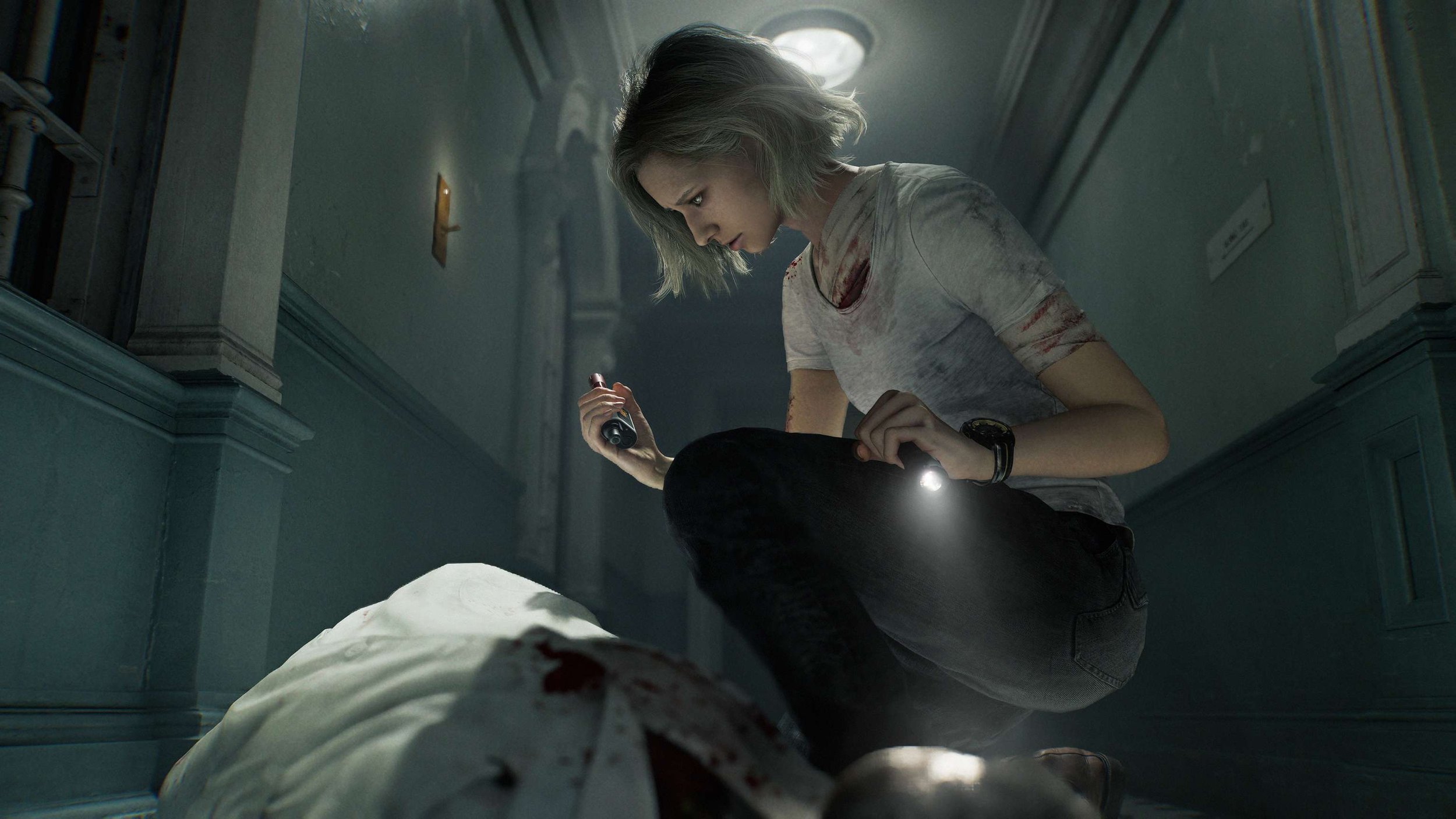
The first half of Resident Evil: Requiem is perfect. Grace’s gameplay is peak Resident Evil survival horror. Not only is sneaking past enemies more of a viable option here than in prior entries, but it’s a necessity due to how scarce your resources are at the start of Requiem. Every monster encounter feels like a gamble; do you risk wasting precious ammo to deal with this zombie, or do you try to sneak past them? That’s on top of the cramped number of inventory slots Grace starts out with, which barely give the player enough room to carry everything they need and might come across.
The exploration and puzzle-solving is the best it’s ever been during the modern era of Resident Evil. It’s satisfying to look around Rhodes Hill Chronic Care Center, figure out its various puzzles, and discover items that can be used to further open up the map. The game rewards the player for going out of their way to fully explore Rhodes Hill with additional tools and optional upgrades that will make Grace’s journey more manageable. This includes the welcomed return of the Antique Coin system from Resident Evil 7: Biohazard (2017), as well as Requiem’s brand new blood collection mechanic.
The Antique Coin system functions the same as it did in Resident Evil 7. Players who find Antique Coins hidden around the map or by solving optional puzzles can insert them into the display cases in Rhodes Hill’s lounge. Doing so can acquire them an inventory expansion, a health upgrade, an attack upgrade, and an upgrade for the aforementioned Blood Collector.
After obtaining the Blood Collector in Rhodes Hill, the player can gather any blood that they come across or get by killing an enemy. The blood Grace collects is then used to craft items with whatever scraps she can get her hands on. This new mechanic fits right in with the series, and it adds another engaging layer to how the player can tackle the game. Do you use the blood you’ve accumulated to craft more bullets that you can defend yourself with (and potentially use to get more blood in the process), or do you choose to craft a Hemolytic Injector so that you have the option of a stealth kill, but without the possibility of getting a return on your blood investment? These choices make each experience with Requiem unique.
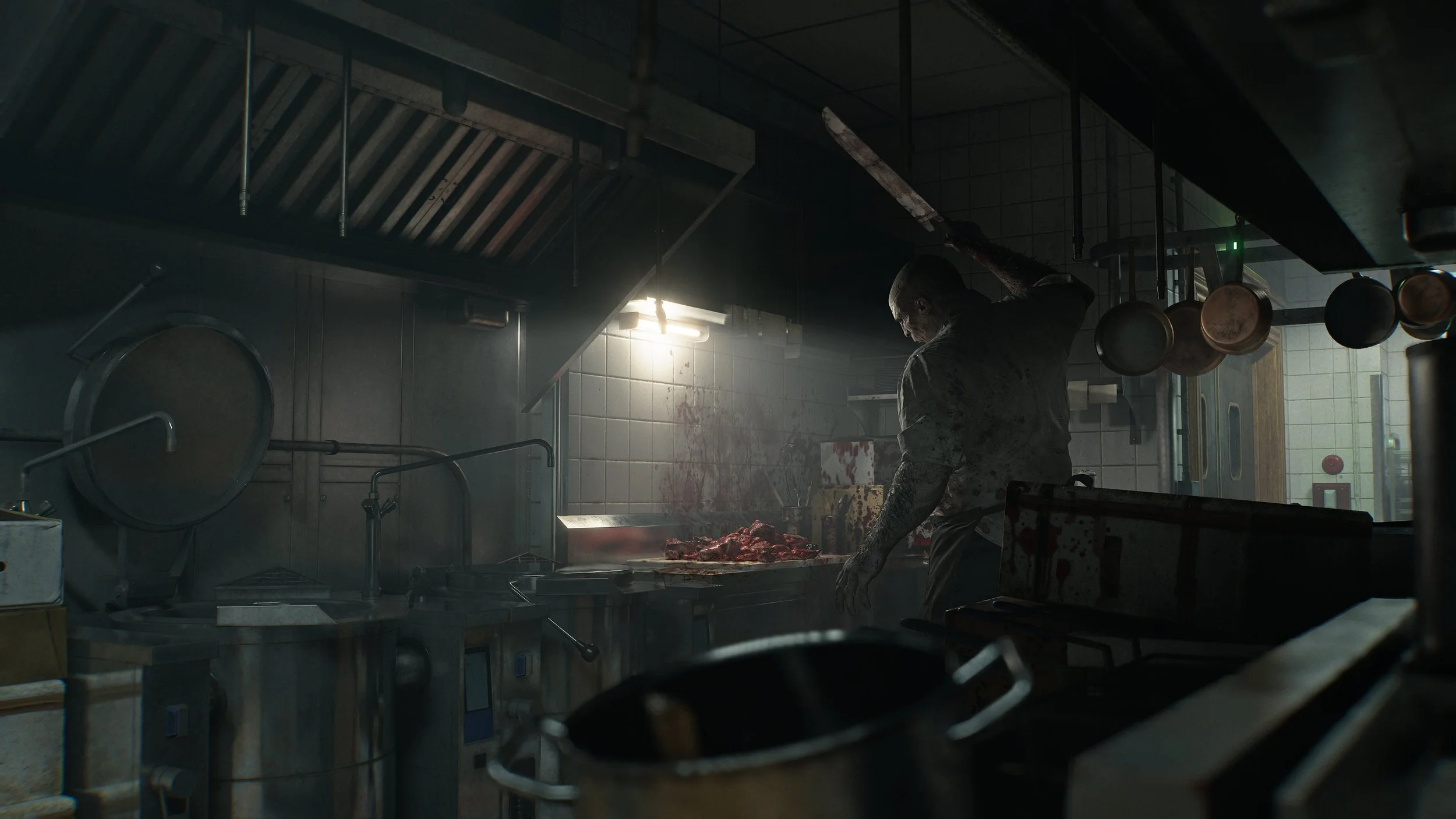
Of course, what would a survival horror game be without its setting and monsters? Resident Evil: Requiem delivers on that front, giving us something familiar in a way we’ve never seen before. Rhodes Hill—and even Raccoon City to some extent—have so much personality to them. The dark and disturbing horrors created and set loose at the Chronic Care Center contrast nicely with the ruins of Raccoon City that have been decaying for the past three decades, yet somehow never died. This is thanks in no small part to the creatures roaming these locations. Longtime fans of Resident Evil will already be familiar with zombies, but not the ones present in Requiem. Everyone at Rhodes Hill—the staff, the scientists, the doctors, and the patients—have all been infected, but each of them retain fragments of the person they once were. For the first time in the series, many of the zombies in this game are unique characters, with a handful even being expanded upon in documents found at Rhodes Hill. This makes them the most memorable zombies of any Resident Evil game, as well as the deadliest, with some of them still clutching a variety of objects that will readily be used as weapons against the player. That’s not even mentioning Blister Heads, the grotesque, far more aggressive form that zombies mutate into after being killed and left alone for too long.

But there’s something far worse than zombies lurking in the dark shadows of Rhodes Hill Chronic Care Center: The Girl, a tall, lanky husk of a patient whose deformed body is sensitive to bright light. The way that Requiem utilizes light whenever the player has to face The Girl is very clever, whether it be a hospital wing with spotty power or a series of underground rooms that can only be lit up via a handful of battery sockets. While many of her appearances are scripted to some extent, she still scared me even on my second playthrough. I was on the edge of my seat during every encounter, hiding away before sneaking past her or scurrying to the nearest light for safety. In my opinion, she’s the scariest stalker enemy of the series.
None of this would be nearly as effective were it not for the atmosphere of Rhodes Hill. I’m not someone who tends to pay much attention to the soundtracks of movies or video games, so when I say that Resident Evil 9’s score is an all-timer for the series, I mean it. The sound design, lighting; everything here is wonderfully creepy.
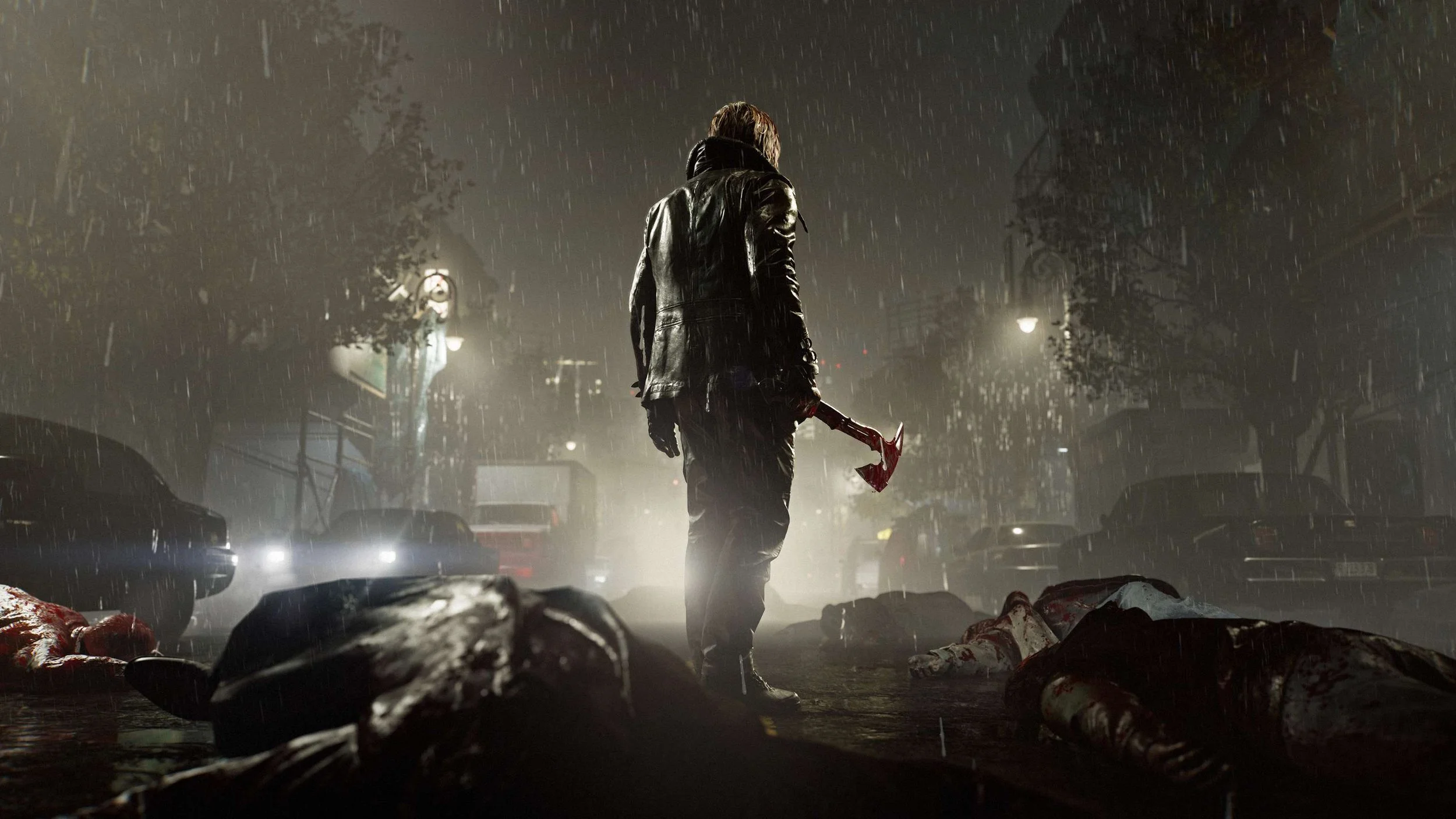
I’ve spent a lot of time talking about the chilling survival horror sections the player experiences as Grace, but Requiem also includes cinematic action sequences when playing as Leon. This game takes the combat established in the remake of Resident Evil 4 (2023) and expands on it. Playing as Leon feels badass, whether you’re using his array of guns, his trusty hatchet, or even turning a zombie’s weapon against them. But he’s not invincible; a few wrong moves, and Leon is dead meat. This game pushes him to his absolute limits, and for the most part, it’s awesome.
Both Grace and Leon are great protagonists. Grace is a breath of fresh air for the series; it’s nice to have a Resident Evil protagonist that’s a scared, anxious mess instead of a capable badass in the face of unimaginable horrors. On the opposite end of the spectrum, Leon is as strong as he’s ever been. He’s been my favorite Resident Evil character ever since the remake of 4 expanded on him and the trauma he’s struggled with since Resident Evil 2 (1998, 2019). His usual sarcasm is entertaining to watch, but his heartfelt moments hit just as hard, and I love how Requiem closes out his arc in regards to Raccoon City. Victor Gideon is a great villain to go with them; he’s a menacing, creepy little freak. I love him, he’s a contender for my top three Resident Evil villains. I love just about every character that’s in this game, both new and old.

These characters wouldn’t be as good as they are without the performances of the actors behind them. I especially need to shout out the very talented Angela Sant'Albano and Nick Apostolides, Grace and Leon’s actors respectively. It’s crazy to me that Requiem is Sant’Albano’s first video game role. Her acting is so realistic here that a friend of mine remarked that one scene felt as though Capcom actually killed someone in front of her. Apostolides’ work as Leon has been incredible to watch across 2 & 4’s remakes and Requiem. These games have come out a few years apart from each other, yet somehow he manages to make Leon sound like a completely different person in each of them. Not a different character, but someone who’s at vastly different points of his life and who has changed drastically as a person since the last time we saw him.
Now, most of what I’ve said so far has been focused on the first half of Resident Evil: Requiem. When it comes to the second half of the game, however, I have some issues. Grace takes a backseat in the story as Requiem shifts its focus to Leon. This isn’t necessarily a problem on its own, as the first half of the game focuses heavily on Grace. My issue with this comes from the fact that Grace’s character doesn’t really do anything for a lot of this time; she’s just kind of there. It’s like the developers weren’t sure what to do with her character. That isn’t to say that she’s like this during the entire second half of the game, but it was enough to be noticeable.
Another problem that I started to notice much more at this point in Requiem is with Leon’s parry mechanic. I was really looking forward to it coming back after it was introduced in the remake of Resident Evil 4, but it feels off here. For one, Requiem no longer indicates to you when your parry window is. In fact, it doesn’t even convey that you can parry aside from one tutorial text that pops up in the beginning. I’ve talked with people who’ve played the game and didn’t realize that they could parry until they were at the end. And two, the parry isn’t as consistent here as it was in 4. I had a hard time getting it to work for a large portion of my playthroughs, which was annoying.
It’s a shame, because the rest of Leon’s gameplay is phenomenal. I’m in the minority of people that actually love the bomb detonator section, even if it’s a little too long. The various unique levels, great exploration, and the mostly awesome combat are so cool. Plus, the monsters are really good here. All of the returning enemies in Requiem are the best iterations of those monsters that Resident Evil has seen, with maybe one or two exceptions when it comes to the bosses.
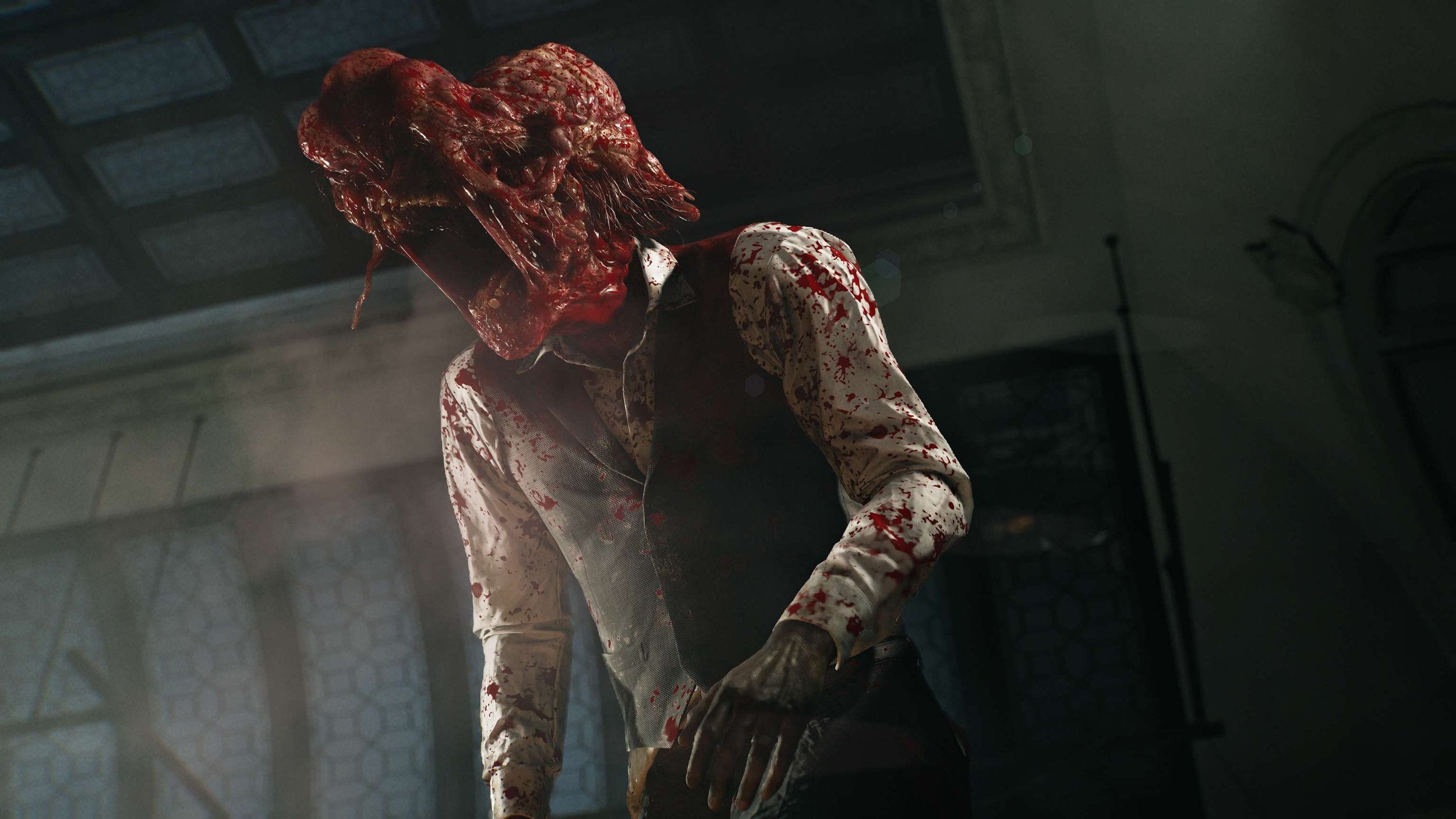
Actually, that brings me to another one of my problems with this half of Requiem: most of the bosses are mediocre. The fights themselves are decent, but because of how many resources the game is throwing at the player by now, they’re not enough of a challenge. On my first playthrough, I was able to speed through most of them without much trouble. Sadly, Grace’s sections during this half of the game suffer from the same issue. With how many resources she gets, monster encounters don’t feel as nerve-wracking or engaging. The gameplay is still great, but again, it’s too easy. A “Hard” difficulty might’ve addressed these issues, but Requiem doesn’t have one. The only difficulty higher than “Standard” is “Insanity,” which I’ve heard is brutal.
This connects to my biggest flaw with the last couple hours of Requiem, that being how underwhelming they are. The boss fights are weak, the setting and monsters don’t have as much personality in the final area, the horror isn’t as strong during Grace’s sections (aside from The Children), the story disappointed me with how many plot threads are left dangling, and the game wraps up quicker than I had expected. It’s not terrible by any means; what’s there is still good, even great at times. But when I compare it to how spectacular everything else is that Resident Evil: Requiem has to offer, all I can think of is how amazing it could’ve been.
Despite all of these flaws though, the game we got is still incredible. If I were to slot Resident Evil 9: Requiem into my series tier-list from a couple weeks back, I think I’d put it in either third place behind Resident Evil 8: Village (2021) and Resident Evil 4 (2023) or fourth behind Resident Evil 2 (2019). Capcom has already announced a few DLCs coming soon, those being a Photo Mode, a minigame mode in May, and a story expansion. In the meantime, you can play Resident Evil 9: Requiem now on most major platforms for $69.99 standard and $89.99 deluxe edition.